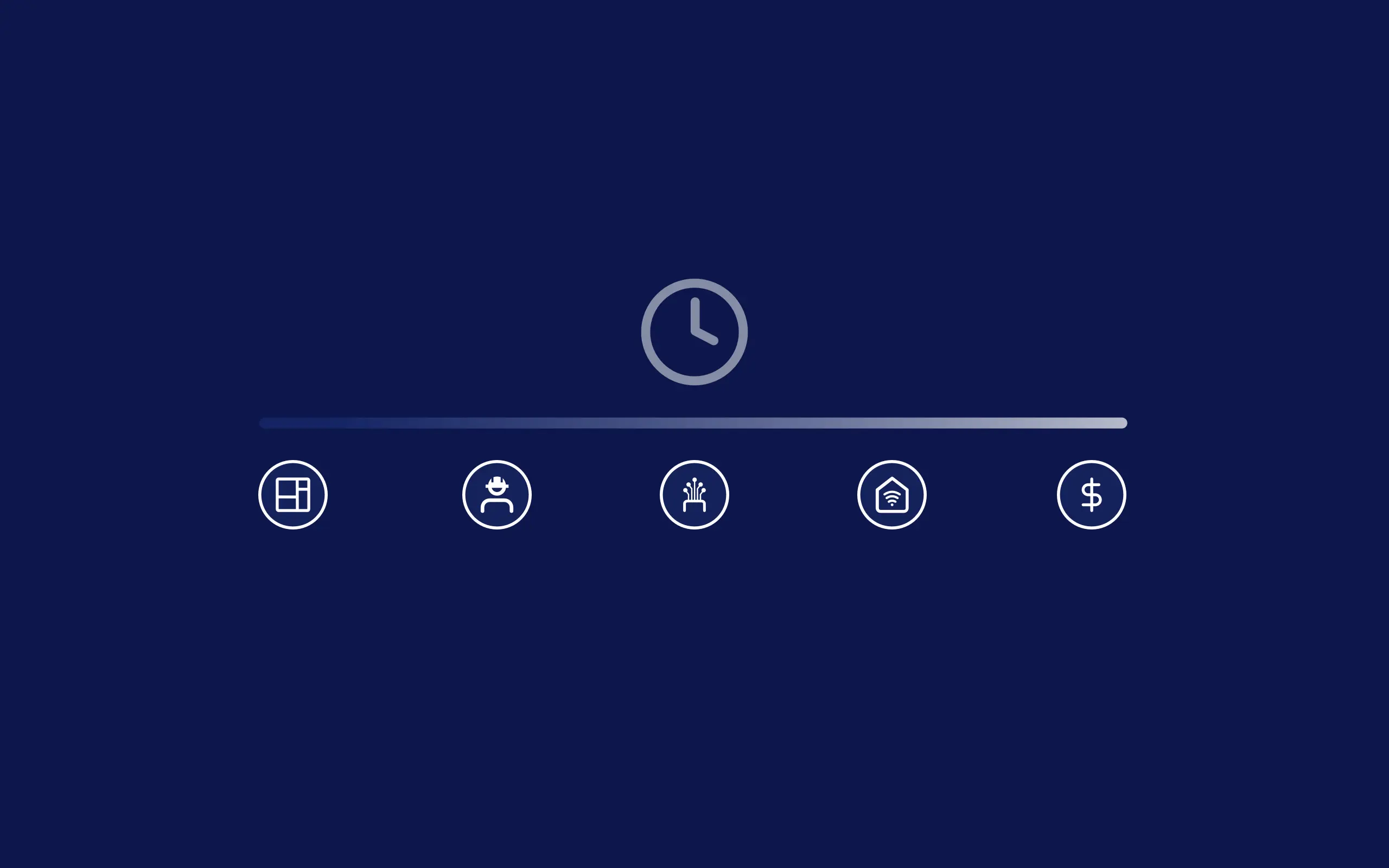
Key Takeaways
- The fiber optic coverage rate in Germany stood at 52.8 percent by mid-2025. In contrast, the take-up rate was 27 percent.
- Every unactivated connection extends capital tie-up.
- Time-to-Revenue describes the period between investment and first revenue.
- Activation impacts liquidity, ROI, FTTH profitability, and network utilization.
- Customer self-service reduces friction in the activation process and accelerates revenue realization.
The rollout is complete. Why is economic success still elusive?
Civil engineering is complete. The fiber is laid. The home connection is installed. Nevertheless, for many network operators, a phase now begins where a critical economic risk emerges: the period between technical availability and actual usage.
The BREKO Market Analysis 2025 clearly shows this gap. By mid-2025, the fiber optic coverage rate in Germany stood at 52.8 percent. This corresponds to 24.3 million Homes Passed. The fiber optic connection rate was 27.3 percent, or 12.55 million Homes Connected. In fact, 6.6 million fiber optic connections were subscribed. The take-up rate was thus 27 percent. Source: BREKO Market Analysis 2025.
These figures show: Rollout is growing, but economic utilization lags. For network operators, municipal utilities, and internet providers, the central question thus shifts. It's less about the mere availability of the network. What becomes crucial is how quickly an available connection turns into a paying customer.
This exact timeframe describes Time-to-Revenue. Time-to-Revenue measures the period between investment and the start of recurring revenues. In fiber optic rollout, this metric is particularly relevant because high upfront investments meet delayed revenues. As long as a connection remains unactivated, no revenue is generated. At the same time, investments remain tied up, operating costs continue to accrue, and refinancing is delayed.
FTTH profitability therefore increasingly depends on how quickly available connections are actually utilized. This concept directly ties into the article Why Fiber Optic Activation Determines the Success of Rollout Projects Availability alone does not create an economic effect. Only usage makes the network value-generating.
What does Time-to-Revenue mean in the fiber optic context?
In the fiber optic context, Time-to-Revenue describes the period between the technical availability of a connection and the point at which this connection is actively used and billed. Put differently: This metric measures the speed at which investments are converted into recurring revenue.
The shorter this period, the faster the liquidity, network utilization, and ROI of a fiber optic project improve. Typical steps in this phase include:
- Rollout completed
- Home connection available
- Contract signed
- Activation prepared
- Router set up
- Connection first used
- Billing started
In many projects, this phase is underestimated. From a technical perspective, the connection seems complete. From an economic perspective, the actual value contribution only begins with usage.
Why Time-to-Revenue becomes a business risk
The telecommunications market continues to invest at a high level. According to BREKO, investments in the telecom market in 2024 amounted to 15.3 billion Euros across all operators and technologies. Source: BREKO Market Analysis 2025. This level of investment increases the pressure to quickly convert built infrastructure into revenue.
An available fiber optic connection initially incurs costs: civil engineering and infrastructure, planning and project management, home connection, operation, maintenance, and financing. Refinancing only begins with activation.
Slow fiber optic activation directly impacts key economic indicators: delayed invoicing, deferred cash flows, extended capital commitment, reduced predictability for future expansion projects, lower network utilization, and higher service costs before initial use.
Therefore, for many providers, the critical question is: How can existing investments be more quickly converted into recurring revenue?
This question equally affects management, finance, product management, service, and operations. Failing to actively manage Time-to-Revenue leaves a significant portion of the expansion's economic potential untapped.
Why Take-up Rate and Time-to-Revenue are interconnected
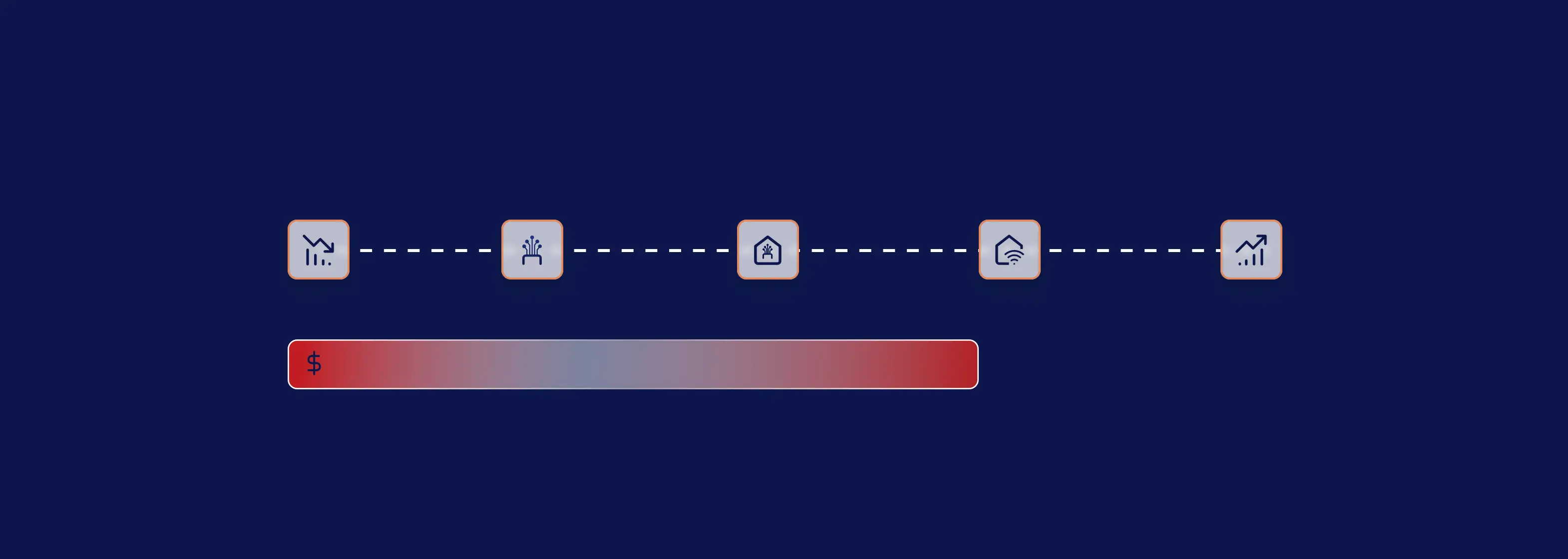
The take-up rate is one of the most important metrics in fiber optic expansion. It shows how many available connections are being used. However, for economic management, this perspective alone is not sufficient. The take-up rate answers the question of how many connections are active. Time-to-Revenue answers how quickly this activation occurs.
Two network operators can achieve the same take-up rate after twelve months. Nevertheless, their economic situations can be completely different. The first provider activates many connections within a few weeks of going live. Invoices are issued early, revenues flow in promptly, and amortization begins faster. For the second provider, the same process takes several months. Customers wait for information, contact the hotline, or postpone the setup of their connection. Revenues start later, even though the same number of connections are eventually used.
The take-up rate describes the outcome. Time-to-Revenue describes the economic speed to get there. A long activation phase thus impacts several key business metrics simultaneously: higher capital tie-up, later revenue realization, higher service costs, lower network utilization, and slower refinancing of further expansion projects.
Anyone who wants to understand in more detail why mere connection availability does not automatically lead to usage, will find in the article Why the Take-up Rate Stalls: Customer Experience as a Lever for Fiber Optic Acceptance an additional perspective on demand, acceptance, and customer experience.
Why Activation Takes Longer Than Many Providers Expect
On paper, activating a fiber optic connection seems simple. The contract is signed. The connection is available. Technically, nothing stands in the way of its use. In practice, however, this is often where a phase begins that many network operators underestimate.
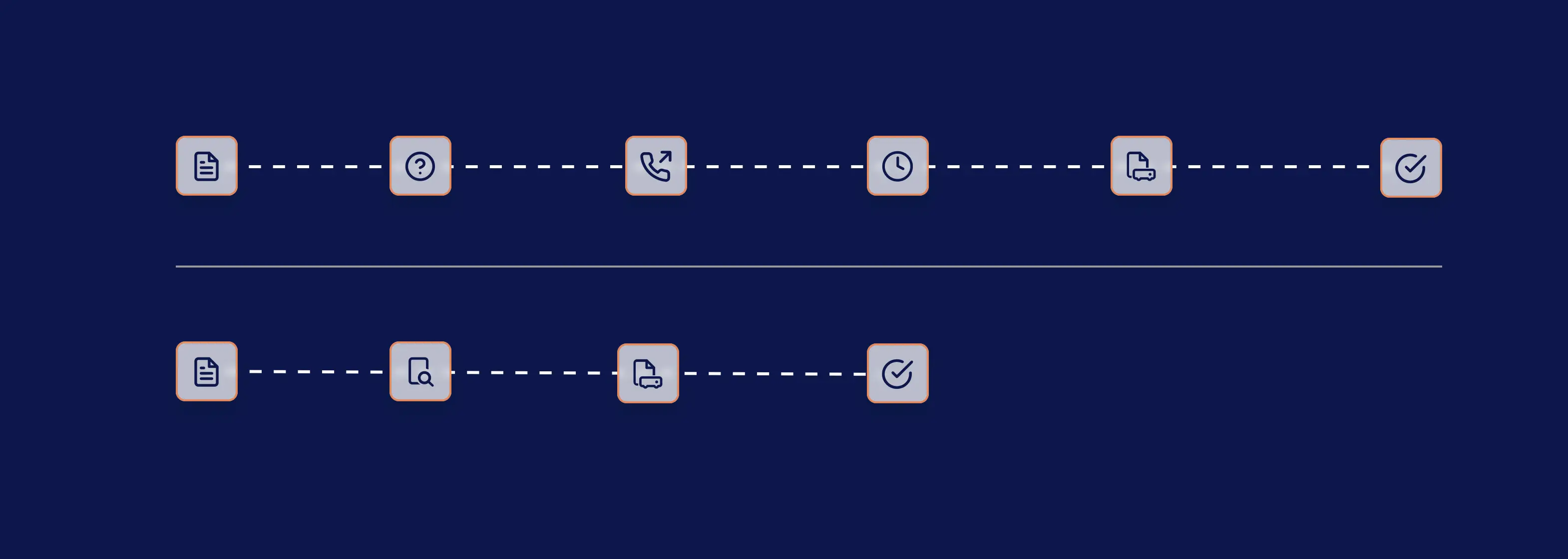
From the customer's perspective, the process often looks like this: Contract signed → Waiting for information → Uncertainty about the next step → Questions about installation, router, or Wi-Fi → Hotline contact → Further waiting time → Activation.
Individually, the steps seem small. Taken together, they significantly extend the time until first use. These are rarely technical issues; often, there's a lack of guidance. For example, customers don't know when to connect the router, which devices are needed, whether the connection has already been activated, or what step comes next.
Uncertainty leads to queries. Queries lead to waiting times. Every additional waiting period extends the time-to-revenue. This is particularly evident during initial setup. The article Why Router Initial Setup is One of the Most Critical Service Moments shows why precisely this moment often determines support effort, customer satisfaction, and activation speed.
Activation is an Experience Problem with Economic Impact
Many providers invest heavily in expansion, infrastructure, sales, CRM, ticketing, and network management. These systems are important. They organize internal processes, customer data, technical information, and support operations. However, the activation journey from the customer's perspective often remains unstructured.
This creates a gap between internal processes and the actual user experience. The consequences are evident in customer service:
- "Is my connection already active?"
- "Which router do I need to connect?"
- "Why isn't my Wi-Fi working yet?"
- "What do I need to do now?"
These contacts often arise due to missing, delayed, or unclear information. Every unnecessary hotline contact extends the activation period, ties up service capacity, and increases the cost per connection. Thus, activation becomes a central component of the customer experience. At the same time, it directly impacts FTTH profitability.
The simpler the path to first use, the faster business value is generated. A valuable complement to this is the article Customer Effort Score in Technical Support, because it shows why customer effort is a key metric for service quality and activation.
How Customer Self-Service Reduces Time-to-Revenue
Customer Self-Service is often equated with call reduction or automation. That's too simplistic. Its true impact lies in completing activations faster. Fewer queries are a result of a process that leads customers to their first use more quickly.
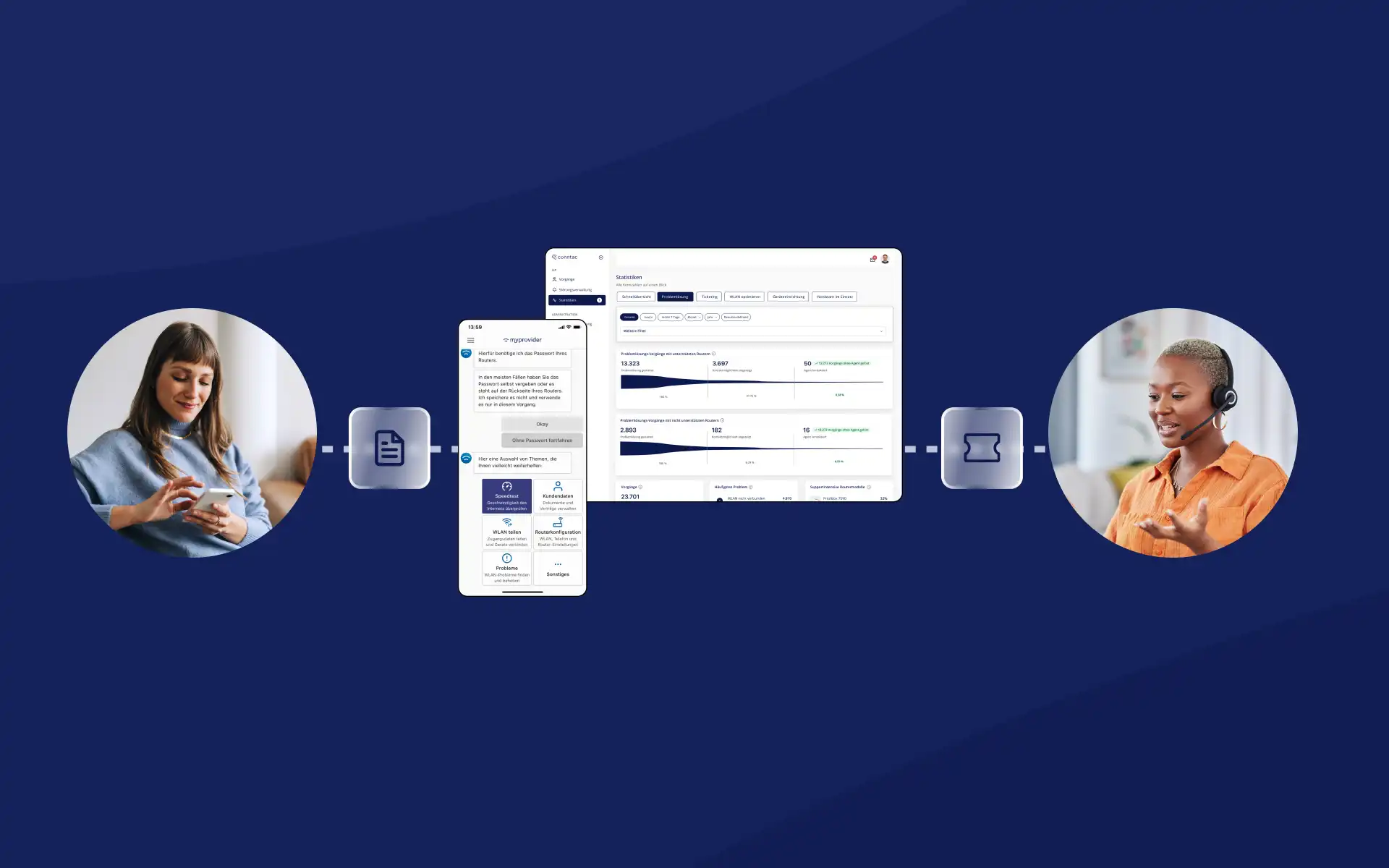
Customer Self-Service doesn't replace a ticketing system. Nor does it replace a CRM, network management, or an ACS. It complements existing systems with a layer that is often missing: structured process guidance from a customer's perspective.
While internal systems manage information, Customer Self-Service guides the path to successful use. This includes, for example:
- transparent status displays for activation progress
- clear step-by-step instructions
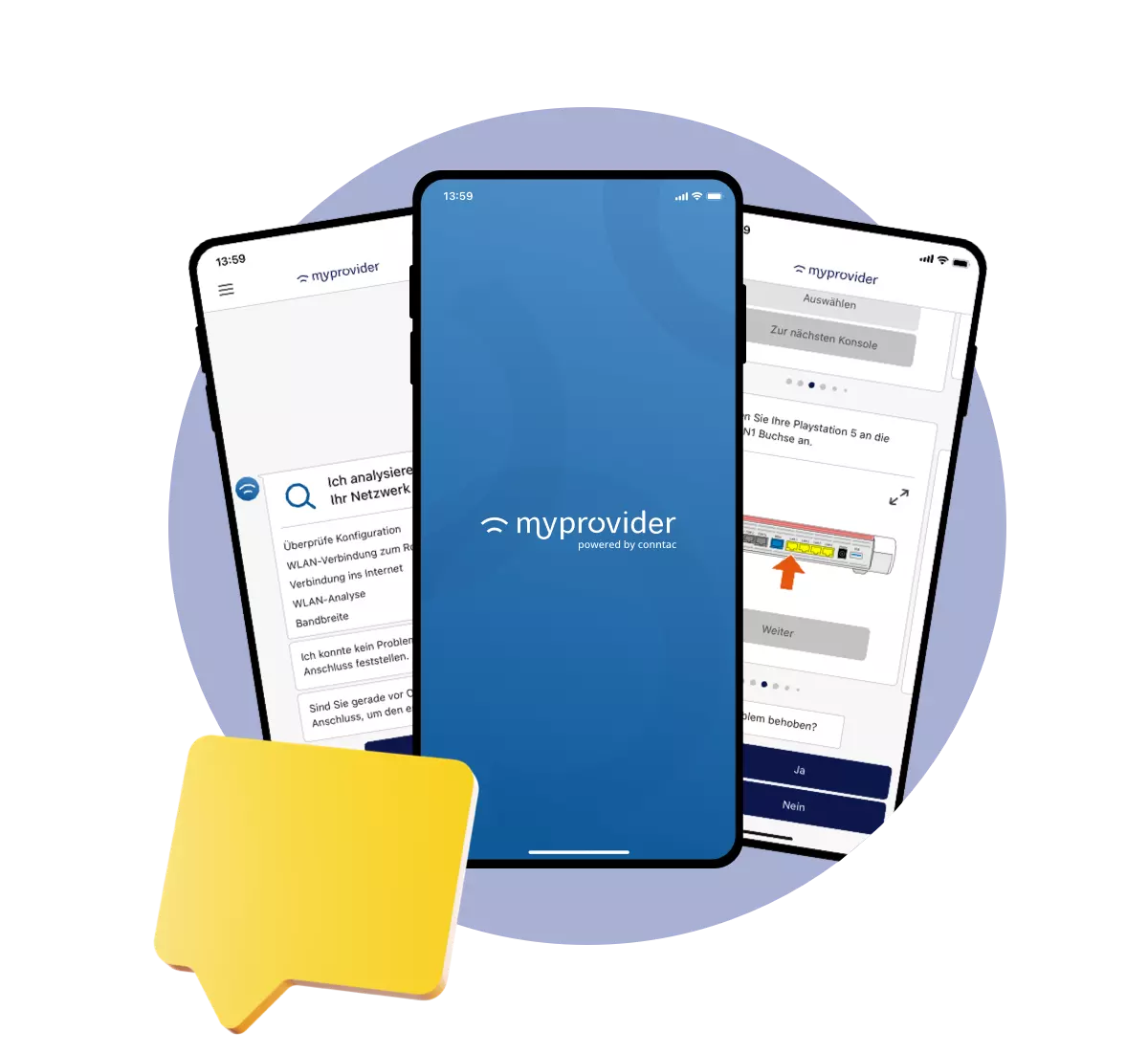
- guided router and Wi-Fi setup
- automatic notifications for the next necessary step
- digital support for common questions before the first hotline contact
- seamless handover to personal support when the case becomes more complex
This changes the entire activation process. Customers don't have to gather or interpret information themselves; they are guided through the process. Network operators simultaneously benefit from fewer hotline contacts before activation, shorter processing times, fewer media discontinuities, faster commissioning, and earlier revenue realization.
The reduction in time-to-revenue results from improved process management. Why self-service needs to do more than just provide information is explored in the article Why Self-Service Often Fails – And What's Overlooked in depth. Furthermore, for the specific activation phase, the Setup Assistant is relevant because it provides structured guidance from connection to usage.
Why Regional Providers Benefit Most
Time-to-revenue is particularly relevant for regional internet providers, municipal utilities, and communal network operators. The reason lies in the structure of their investments. Expansion projects often focus on individual communities or regions. Investments are made within a short period, while revenues are generated only gradually.
If the activation of many connections is delayed simultaneously, capital commitment also increases. Especially for regionally active companies, this directly impacts liquidity and financial leeway for further projects.
Furthermore, regional providers often have a close relationship with their customers. This proximity can be leveraged digitally. Customer self-service can provide regional expansion information, display individual activation statuses, communicate local appointments, and answer frequently asked questions about the respective expansion area.
BREKO also shows that private investor models and municipal utilities achieve high coverage rates in self-financed expansion. Source: BREKO Market Analysis 2025. For these providers, a short time-to-revenue is particularly valuable: it protects liquidity, improves predictability, and reduces operational friction in expansion areas.
Especially in multi-family homes, it often becomes clear that usage after expansion is a distinct phase. The article Expansion Complete – What's Next? Why Multi-Family Homes Become a Crucial Phase deepens this transition between infrastructure and actual usage. The contribution is also technically relevant, Understanding Network Level 4 and 5 in the Fiber Optic Network, because it explains where usage specifically originates within the building and apartment.
Time-to-Revenue is not merely a service metric
Many companies categorize activation under customer service. That's too narrow a view. Time-to-Revenue impacts multiple business units concurrently:
Time-to-Revenue therefore directly connects customer experience with business success. Without structured activation, operational costs often rise faster than revenue. That's precisely why Time-to-Revenue should be viewed as a common steering metric.
Common Questions about Time-to-Revenue in Fiber Optic Rollout
What most strongly influences Time-to-Revenue?
The activation phase following contract signing has the strongest impact on Time-to-Revenue. The more transparent, comprehensible, and straightforward this process is, the quicker a connection is activated and billed for the first time.
Why is Time-to-Revenue crucial for FTTH economic viability?
Time-to-Revenue indicates how fast rollout investments convert into recurring revenues. A short Time-to-Revenue improves liquidity, reduces capital tie-up, and supports the refinancing of further expansion projects.
How does Time-to-Revenue differ from the take-up rate?
The take-up rate shows how many connections are being used. Time-to-Revenue also describes how quickly this usage occurs. Both metrics complement each other and together provide a more complete picture of the economic viability of a fiber optic project.
Is Time-to-Revenue only relevant for large network operators?
No. Regional providers and municipal utilities, in particular, benefit from short activation times. As investments are often concentrated in specific expansion areas, delayed revenues directly impact liquidity and further expansion projects.
What specific role does Customer Self-Service play?
Customer Self-Service guides customers through the activation process. Clear information, guided setup steps, and transparent status displays reduce uncertainties, avoid unnecessary hotline contacts, and shorten the time until first use.
Conclusion: Managing Time-to-Revenue means managing profitability
In recent years, the central question for many network operators was: How quickly can we deploy fiber optics?
In the future, a different question will increasingly determine economic success: How quickly does an available connection become a paying customer?
Time-to-Revenue describes precisely this speed. Fiber optic expansion creates the technical foundation for future revenues. This investment only becomes economically effective upon activation. Between contract signing and active use lies a phase where capital is tied up, service costs arise, and it is decided when a connection generates revenue.
Network operators who consistently design activation from the customer's perspective benefit in multiple ways:
- Connections are utilized more quickly.
- Revenues are generated earlier.
- Service costs decrease.
- Network utilization improves.
- The profitability of fiber optic expansion increases.
Customer self-service plays a central role in this. It neither replaces ticketing systems, CRM, nor network management solutions. Instead, it complements existing system landscapes precisely where friction often arises today: between contract signing and successful usage.
Modular platforms like MyProvider help network operators to provide structured guidance for activation processes, safely lead customers through the setup, and sustainably shorten the time-to-revenue.


.webp "Rollout without IT effort")