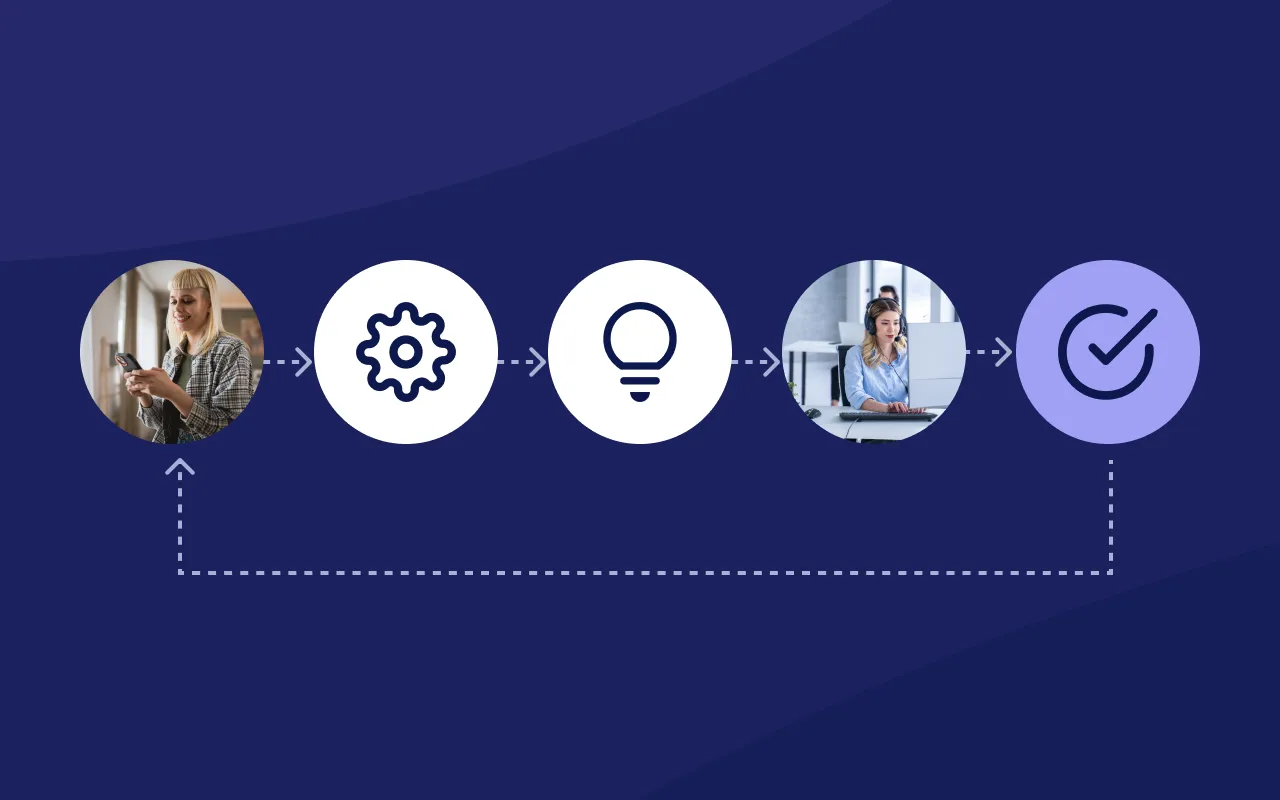
Why do many ISPs underestimate the initial setup moment?
The expansion is complete.
The transmission is carried out according to plan.
And yet the hotline rings.
For many Internet providers, this is exactly where a familiar pattern starts: In the first few minutes after switching, call numbers, tickets and inquiries skyrocket – even though everything is technically working.
In this phase, it is decided whether new customers experience security or uncertainty. It is the first real moment of use – and therefore one of the most influential along the entire customer journey.
Why are so many tickets created immediately after the ticket has been switched?
The high number of support contacts immediately after switching is rarely the result of technical faults. It is primarily caused by uncertainty.
Typical causes include:
- lack of orientation immediately after activation
- different router models and individual connection options
- Uncertainty about cabling, access data or the right time
- The expectation: “It has to work now”
From the customer's point of view, this expectation is understandable. From the providers' point of view, however, there is a system gap here: The initial set-up is technically prepared, but barely managed in terms of process.

Why are classic support models reaching their limits at this point?
Many service organizations are trying to intercept this phase using existing means. In practice, however, it quickly becomes apparent that classic models do not scale here.
From an ISP perspective, three points are particularly relevant:
- Phone support doesn't scale with circuit spikes
- Technician appointments are expensive and in many cases unnecessary
- Knowledge is distributed in PDFs, emails, welcome letters and websites
The central finding is therefore:
The bottleneck is not technology, but leadership through the process.
What does a setup assistant do differently at this moment?
A setup assistant does not replace technology or network management. His task is elsewhere.
It structures the initial set-up moment.
In concrete terms, this means:
- technical steps are translated into comprehensible, sequential processes
- Customers get orientation before uncertainty occurs
- the process is guided instead of explained retrospectively
A helpful tip for this is:
Good initial setup is not a support case, but a guided self-service process.
What steps does a guided initial router setup need to cover?
For the initial setup to work reliably, several aspects must be systematically brought together. In practice, a managed facility typically includes:
- Choosing the right router model/CPEs
- Comparison with the order confirmation
- Switching date reminder
- understandable cabling instructions
- secure recording of relevant login data
- optional setup of additional devices such as repeaters or telephones
- final check of the connection
It is not so much the individual step that is decisive than the logical sequence. Only this creates safety.

What effects do ISPs observe during operation?
If the initial setup is managed consistently, there are clear effects in everyday operations. These cannot always be immediately represented in individual key figures, but they are clearly noticeable.
The following are frequently observed:
- Fewer inquiries on the day of the shift
- a quieter start for new customers
- Relief for first and second-level teams
In particular, the nature of the contacts is changing: away from hectic inquiries and towards targeted concerns.
Why does this approach work regardless of connection technology?
A key advantage of guided initial setup is that it is not tied to a specific access technology.
Whether DSL, cable, FWA or fiber optic:
Uncertainty always occurs at the same moment – when you connect and set up for the first time.
The connection type plays a subordinate role here. It is crucial that customers know what they should do and when. This is exactly where process management comes in.
Conclusion: Why is the initial setup not a detail?
The initial router setup is one of the few moments that all new customers go through. Their influence on customer satisfaction, support costs and the quality of customer relationships is correspondingly large.
Anyone who consciously manages this moment reduces operational expenses and creates trust right from the start. Guided self-service is preventative – not reactive.
Solutions such as the setup assistant in MyProvider show how this critical moment can be systematically secured without additional burdens for service teams.






.webp "Less effort, more loyalty – Customer Effort Score (CES)")