Self-service is everywhere – but problems persist
Self-service is now standard practice. Customers should be able to solve problems themselves, complete processes digitally, and access information at any time. For companies, this initially sounds logical: lower support costs, faster processes, and greater efficiency.
Yet, in many organizations, a different picture emerges. Support costs remain high. Processes are abandoned. Despite available features, users still contact hotlines or service.
This initially seems contradictory. After all, the systems are in place. The processes have been digitized. The content exists.
The real question, therefore, is not: „Is there self-service?“
But rather: „Does self-service work in actual use?“
Where the problem arises
Many self-service offerings are built from a system perspective. Information is provided. Features are added. Processes are technically mapped correctly. However, in actual use, a completely different situation arises. People are usually not in a relaxed environment when using self-service. This often happens:
- during a disruption
- under time pressure
- concurrently with other tasks
- without prior technical knowledge
A common scenario for many internet providers:
- No Internet
- Router blinking red
- Home office not working
- The app shows several technical options
Technically speaking, all information is available.
Despite this, users immediately feel uncertain.
- What does the error message mean?
- What's the next relevant step?
- Is this a Wi-Fi problem or an outage?
- What happens if I do something wrong?
This is precisely where the real problem arises. Not due to a lack of features, but due to a lack of guidance.
At this point, MI 2.0 comes into play.
MI (Menschliche Intelligenz in German) stands for Human Intelligence. The approach views self-service from the user's perspective and focuses on how people process information, make decisions, and gain orientation. Its goal is to design digital processes in a way that helps users move confidently and clearly toward the next meaningful step.
The actual cause is often misinterpreted
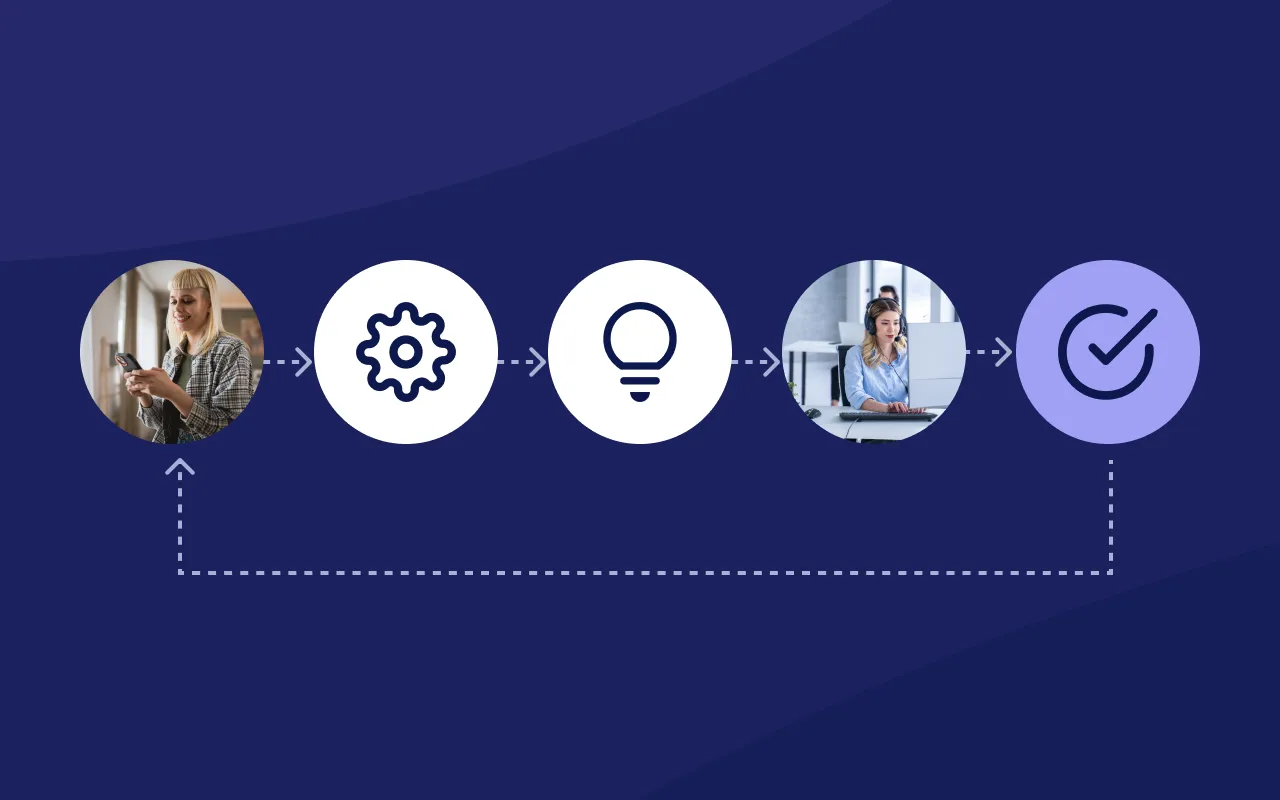
Self-service is often understood as an information problem. The underlying assumption: if enough content is available, users will automatically solve their problems themselves. In practice, however, usage works differently. Self-service is primarily a decision-making process. Within a few seconds, people must:
- understand what's happening
- make sense of information
- evaluate options
- derive a meaningful action
If this process isn't clearly managed, the mental load increases significantly.
This becomes particularly critical when:
- multiple options are visible simultaneously
- technical language is used
- priorities remain unclear
- consequences are not clear
This then leads to a typical pattern: Overwhelm → Stress → Abandonment
Many support contacts arise because users cannot confidently decide what the correct next step is.
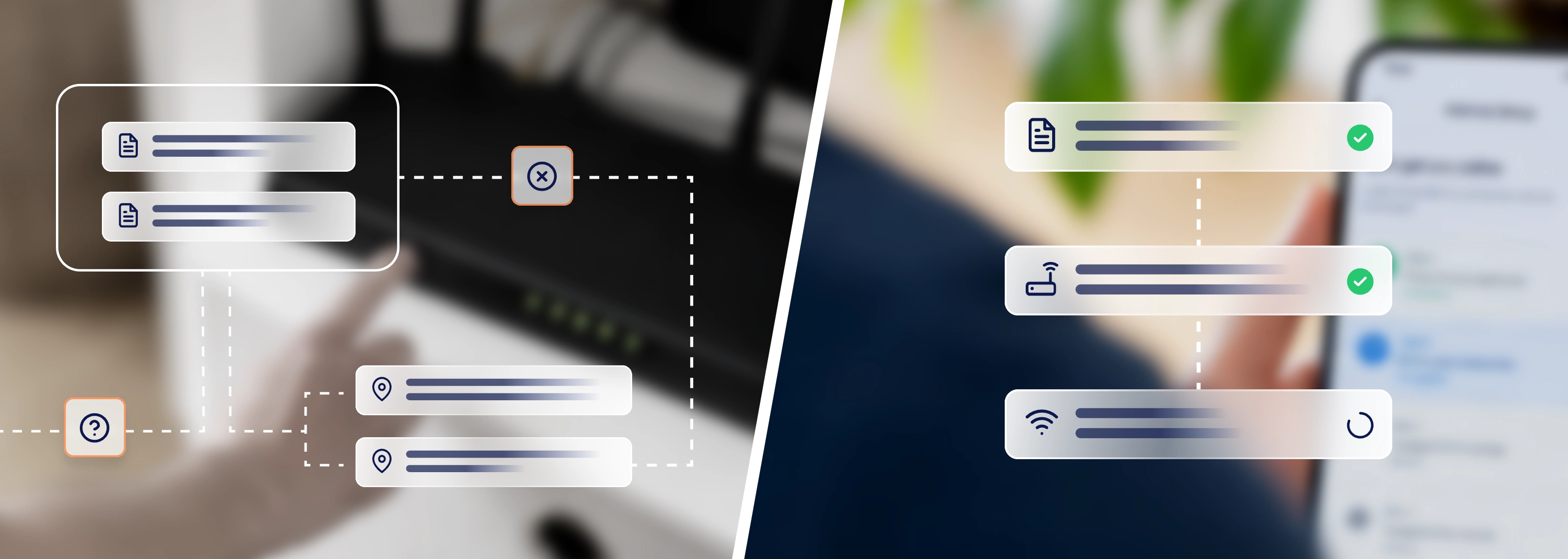
Comparison: Traditional Approach vs. MI 2.0
Why this is business-critical
The impacts extend far beyond individual support cases. The quality of self-service directly influences:
- Support effort
- Customer satisfaction
- Activation and usage
- Propensity to switch
- Perception of the entire service
This becomes particularly relevant when resolving the first issue. That's precisely when the digital service process faces its initial true stress test.
If users don't receive guidance at this point, frustration quickly sets in. Processes appear complicated, even if the actual task is often simple.
This creates a structural problem for providers: increased service contacts, higher operational burden, and underutilization of digital offerings.
This is becoming increasingly relevant, especially in the ISP sector. As technical complexity grows, differentiation is shifting more and more away from the network itself and towards the quality of the subsequent user experience.
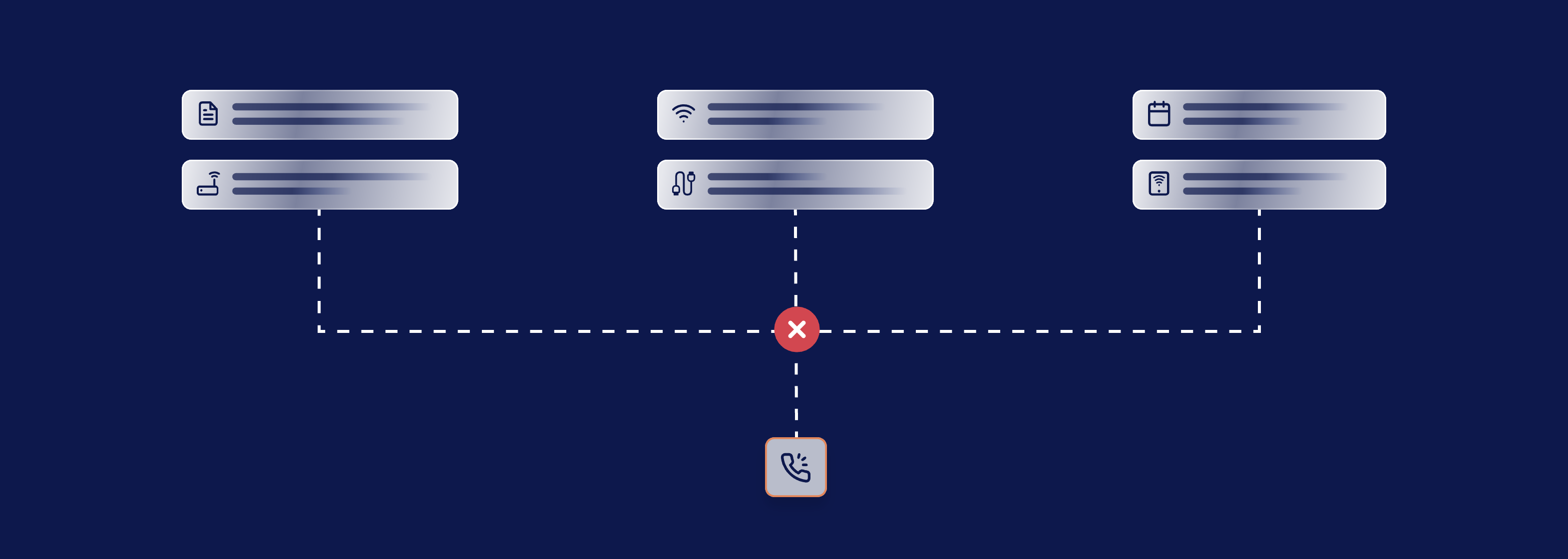
Self-service is defined by its usage
The crucial quality isn't found in the number of features, but in enabling people to act effectively even when facing uncertainty.
The central question, therefore, is: Can users reliably reach the next meaningful step?
This is precisely where a different approach comes in: viewing self-service not as an information system, but as a guided decision-making process.
This also transforms the design of digital processes:
- less complexity
- clearer guidance
- clear language
- concrete next steps
- visible progress
The goal is no longer just providing information, but offering guidance.
Playbook: Self-Service as a Decision-Making Process
In the playbook, we show specifically how self-service can be structured to guide users safely and transparently through processes.
It covers, among other things:
- cognitive load in digital processes
- clear decision guidance
- structuring guided workflows
- self-efficacy and user behavior
- concrete implementation models for service processes
Download Playbook: Self-Service as a Decision-Making Process
Watch Online Talk: Self-Service as Empowerment