.webp "Network expansion is no longer the bottleneck – why the take-up rate determines the success of fiber-optic networks")
At a glance
Fiber optic expansion in Germany is reaching new heights. More connections are becoming available, yet they are not being used immediately. The economic success of a fiber optic network therefore increasingly depends on the take-up rate. There are several process steps between an available connection and active usage that network operators can manage strategically.
Fiber optic expansion reaches a new level
The German fibre optic market has made significant progress in recent years. More and more households and businesses now have access to a fibre optic connection. According to the VATM Telecommunications Market Analysis 2026, around 32 million households and businesses are expected to be passed by fibre by the end of 2026. This corresponds to a Homes Passed rate of approximately 70%. At the same time, around 12.5 million connections are expected to be Homes Connected, while 7.8 million connections will be Homes Activated. This results in a take-up rate of 24.4%.
These figures highlight an important shift. Network expansion remains a fundamental requirement for digital infrastructure. At the same time, however, the commercial reality for network operators is changing. There is often a considerable gap between a connection being available and a customer actively using it. This is where the primary bottleneck has shifted.
The key question is no longer: "How can we build more fibre connections?"
Instead, it has become: "How do we turn an available connection into one that is actively used over the long term?"
Infrastructure alone does not create value
Every newly built fiber optic connection is initially an investment. It only generates an economic contribution once customers order, activate, and consistently use the connection. For network operators, this means that investments must be refinanced.
Network utilization must increase. Customers must be retained long-term. Processes must function efficiently. As expansion areas grow, the economic utilization of the network becomes the primary focus. A connection that is available but not used improves neither network utilization nor revenue.
What does the take-up rate mean?
The take-up rate describes the proportion of available fiber optic connections that are actually used by customers. Simply put:
Homes passed: The connection is technically available.
Homes connected: The connection has been activated.
Take-up rate: How many available connections are actually being used.
This metric is becoming increasingly important. While expansion describes technical progress, the take-up rate shows the economic success of a fiber optic network. This is why not only network operators, but also investors, financiers, and market analysts are increasingly focusing on the development of activated connections.

The bottleneck is shifting
In recent years, the industry has focused primarily on expanding new networks. Today, however, many challenges only arise after the infrastructure is completed. Typical questions include, for example:
Do interested parties even know that fiber optics are available?
Do they understand the process leading up to activation?
Can questions be answered quickly?
How easy is the ordering process?
How long does activation take?
Does the connection work reliably from the first day of use?
Each of these questions ultimately influences the take-up rate. Network expansion is therefore merely the starting point of a much longer customer journey.
There are several critical phases between availability and usage
Many companies view the activation of a connection as a single task. In reality, it consists of several sequential phases.
1. Information
Interested parties need guidance.
Is fiber available?
What are the benefits?
How does the switch work?
Unclear information leads to uncertainty and delays as early as this initial phase.
2. Decision
Even when there is fundamental interest, questions often remain.
When will the installation take place?
What hardware is required?
Does the existing contract need to be cancelled?
The more complex the process is perceived to be, the higher the risk of abandonment.
3. Activation
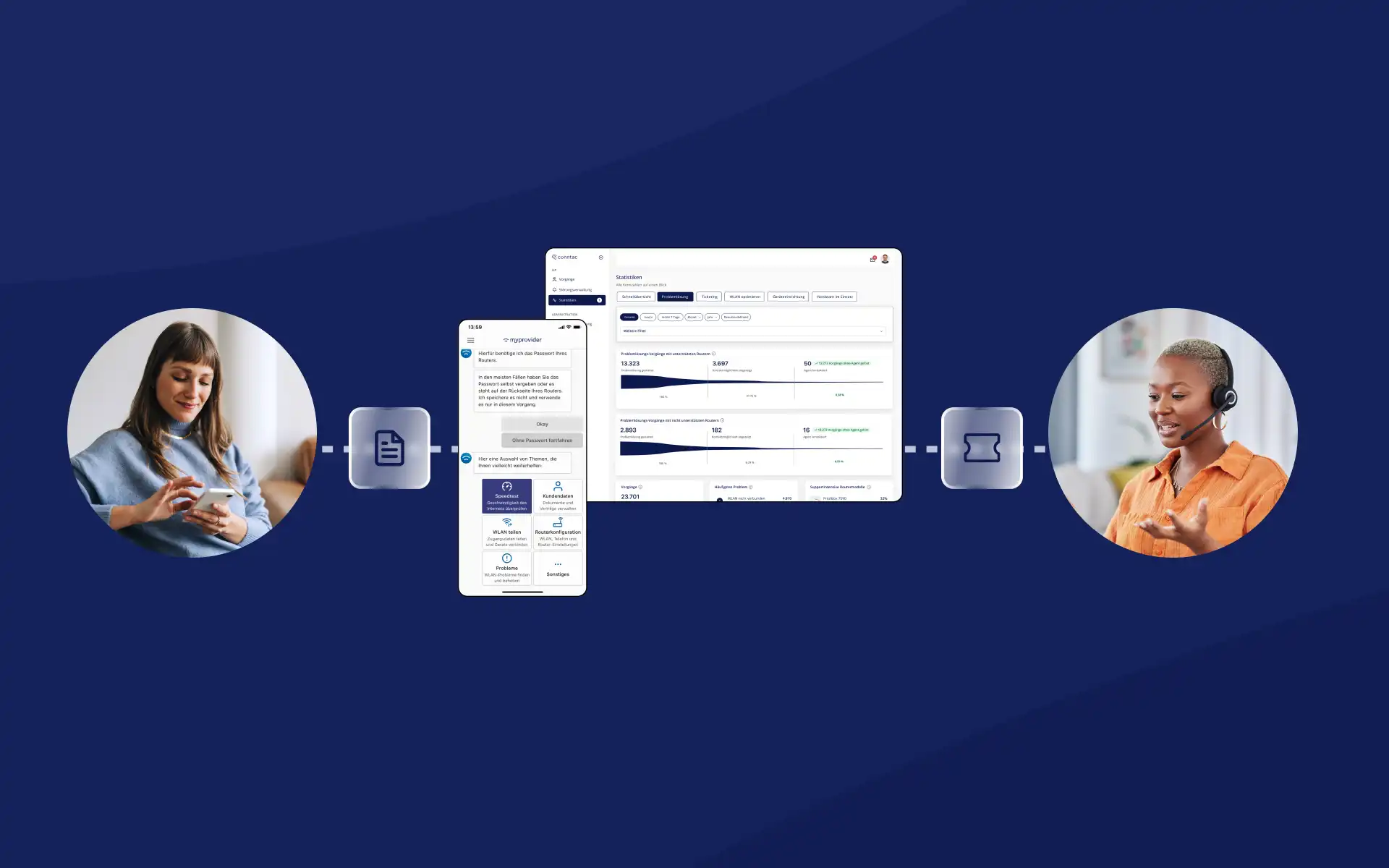
The most time-consuming part often begins after the connection is live. Routers need to be set up. Wi-Fi needs to be adjusted. Technical questions arise. It is precisely during this phase that support volume often increases significantly.
4. Usage
Even after successful activation, it remains to be seen whether customers perceive the connection as a lasting improvement. Wi-Fi issues, unrealistic expectations, or uncertainty during setup often lead to further support inquiries. Therefore, the take-up rate does not end with a successful connection; it continues to evolve throughout the entire initial usage phase.
Key metric in focus: Homes Passed vs. Homes Connected
Fiber optic network expansion is traditionally evaluated based on the number of homes passed. However, this metric alone is no longer sufficient for economic development. The ratio between available connections, activated connections, and the resulting take-up rate is becoming increasingly critical. The larger this gap, the more economic potential remains untapped.
Why the take-up rate is becoming a management metric
As expansion rates rise, the management of fiber optic projects is also changing. In the future, the decisive questions will no longer be exclusively:
How many connections have been built?
How many kilometers of network have been laid?
But rather, for example:
How many households are actually using the connection?
How long does activation take?
Where do process interruptions occur?
Which steps generate the most support inquiries?
How quickly do new connections contribute to the refinancing of the network?
This transforms the take-up rate from a sales metric into a central management KPI.
Expansion remains important – but is no longer enough on its own
Fiber optic expansion remains the foundation of digital infrastructure. Without available connections, there can be no usage. However, as network coverage increases, the economic focus is shifting more and more toward the processes between availability and long-term usage. This is precisely where many of the greatest opportunities lie today. Systematically improving these phases not only increases the take-up rate but also reduces support efforts, shortens activation times, and improves the customer experience.
Conclusion
The fiber optic market is entering a new phase. While expansion remains a vital prerequisite, it is increasingly rarely the sole factor determining the economic success of a network. The real challenge begins after the infrastructure is completed. Between availability, the decision to connect, activation, and stable usage lie numerous factors that determine whether a built connection becomes an active customer. These four phases are the focus of the take-up rate model.
Read more
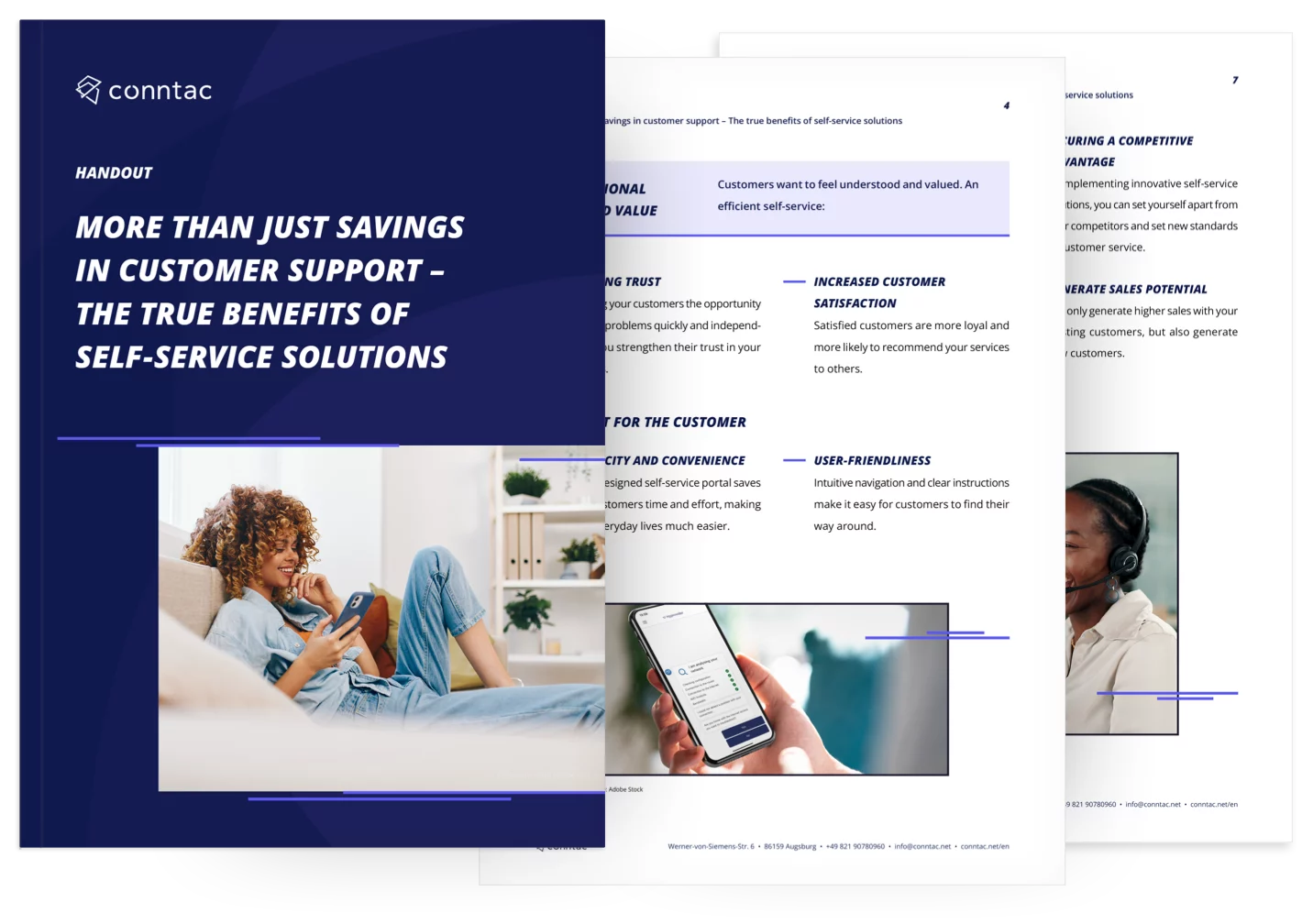
Download our whitepaper "Take-up is not created by expansion" (DE) and learn which levers network operators can specifically control along the entire take-up journey.
FAQ
What is the take-up rate for fiber optics?
The take-up rate describes the proportion of available fiber optic connections that are actually activated and used by customers. It is considered a key metric for the economic utilization of a fiber optic network.
Why is fiber optic expansion alone not enough?
A built connection only generates economic value once it is ordered, activated, and used consistently. Between availability and usage lie several process steps that significantly influence the take-up rate.
Which factors influence the take-up rate?
The most important influencing factors include clear information, a transparent ordering process, seamless activation, and a positive initial user experience.