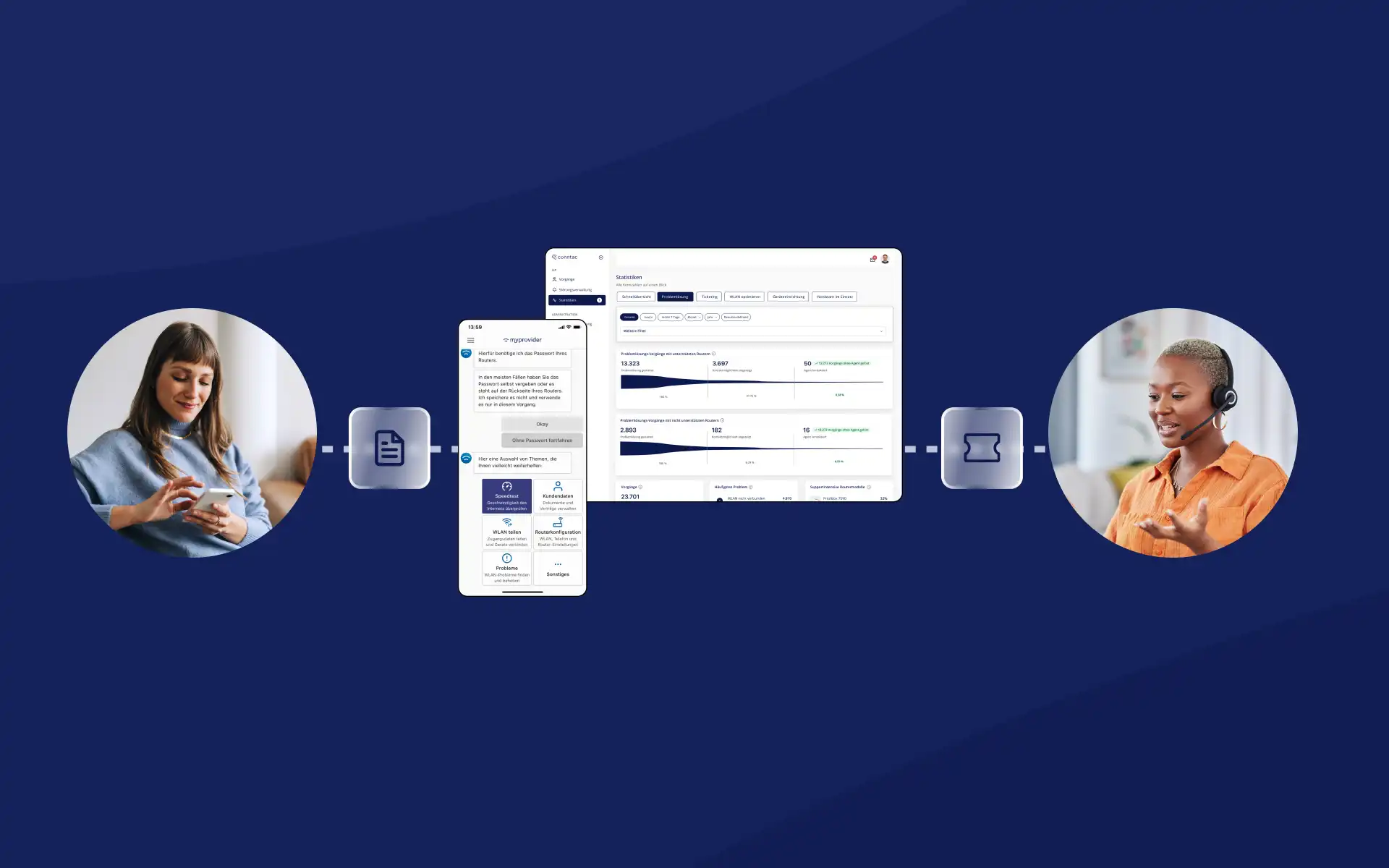
At a glance
The take-up rate begins long before an order is placed. A lack of clear guidance leads to uncertainty, follow-up questions, and abandoned processes. Providing understandable information improves conversion rates while simultaneously reducing the burden on customer service. Network operators can proactively manage and measure this information phase.
The first decision is made long before the order
When people talk about take-up rates, the focus is often on sales, marketing, or activation. However, the decisive process begins much earlier. Even before potential customers decide on a fiber-optic connection, they want to understand what to expect.
Is fiber available at my address?
How does the connection process work?
When will the installation take place?
What are the costs involved?
What happens to my current contract?
If these questions remain unanswered, uncertainty arises. This rarely results in an immediate rejection. More often, people postpone their decision or go looking for more information. This extends the entire activation process. Therefore, the take-up rate does not begin with the order. It begins with orientation.
Why information is economically relevant
Information is often viewed as a marketing task. In reality, it influences several key economic metrics simultaneously. A clear information phase can increase the number of successful orders, reduce customer service inquiries, prevent process abandonment, shorten activation times, and improve customer satisfaction. The more clearly the process is explained, the lower the perceived effort for the customer. This is particularly important for fiber-optic connections. Most people only sign up for a fiber connection once, so they lack experience with the process. What is second nature to network operators often seems complex from a customer's perspective.
.webp)
Complexity is not just about technology
Many information resources focus on technical details. Bandwidths. Routers. Connection technologies. From the customer's perspective, however, the focus is often on completely different questions. For example:
Do I need to cancel my existing internet contract myself?
How long will I be without internet?
Do I need to be at home?
When will the technician arrive?
Where will the router be connected?
Will my Wi-Fi work the same way as before?
Answering these questions early removes uncertainty from the process. Therefore, providing information doesn't mean offering as much content as possible. It means answering the exact questions that occupy people during each phase of their decision-making.
Uncertainty causes friction
Every unanswered question increases the effort for customers. Typical consequences include:
- additional availability checks,
- repeated visits to the website,
- calls to customer service, rescheduled appointments,
- delayed orders, or complete abandonment of the process.
From a network operator's perspective, these events often appear independent of one another. In reality, they frequently share the same root cause: people do not know how the process works or what happens next.
Guidance reduces perceived effort
A successful information process does more than just answer individual questions. It provides peace of mind. This includes, for example:
- a transparent process from contract signing to activation,
- realistic timelines,
- clear explanations of technical terms,
- clear expectations regarding the next steps,
- status information available at any time.
This changes the perception of the entire process. A complex project becomes a comprehensible sequence of individual steps. It is precisely this transparency that makes decision-making easier.
Key metric in focus: Information rate
Many network operators focus primarily on measuring orders. However, the analysis begins much earlier. Useful metrics can include, for example:
- availability checks,
- visits to information pages,
- clicks on expansion maps,
- use of digital consultation services,
- completed information processes.
These metrics show how many interested parties are actually engaging with a fiber-optic connection. They thus form the foundation for all subsequent phases of the take-up journey.
Information is a cross-departmental task
Responsibility for providing good information rarely lies solely with marketing. Product management, customer service, sales, and operations all shape the information provided. For example: Marketing communicates the expansion. Sales provides information on tariffs. Customer service answers follow-up questions. Operations schedules appointments. If customers receive different information at every step, it creates uncertainty. That is why the information phase requires unified process management rather than isolated, individual measures.
Digital self-service options are becoming increasingly important
More and more customers want to access information independently. They expect:
- instantly available answers,
- digital status updates,
- transparent processes,
- support outside of business hours.
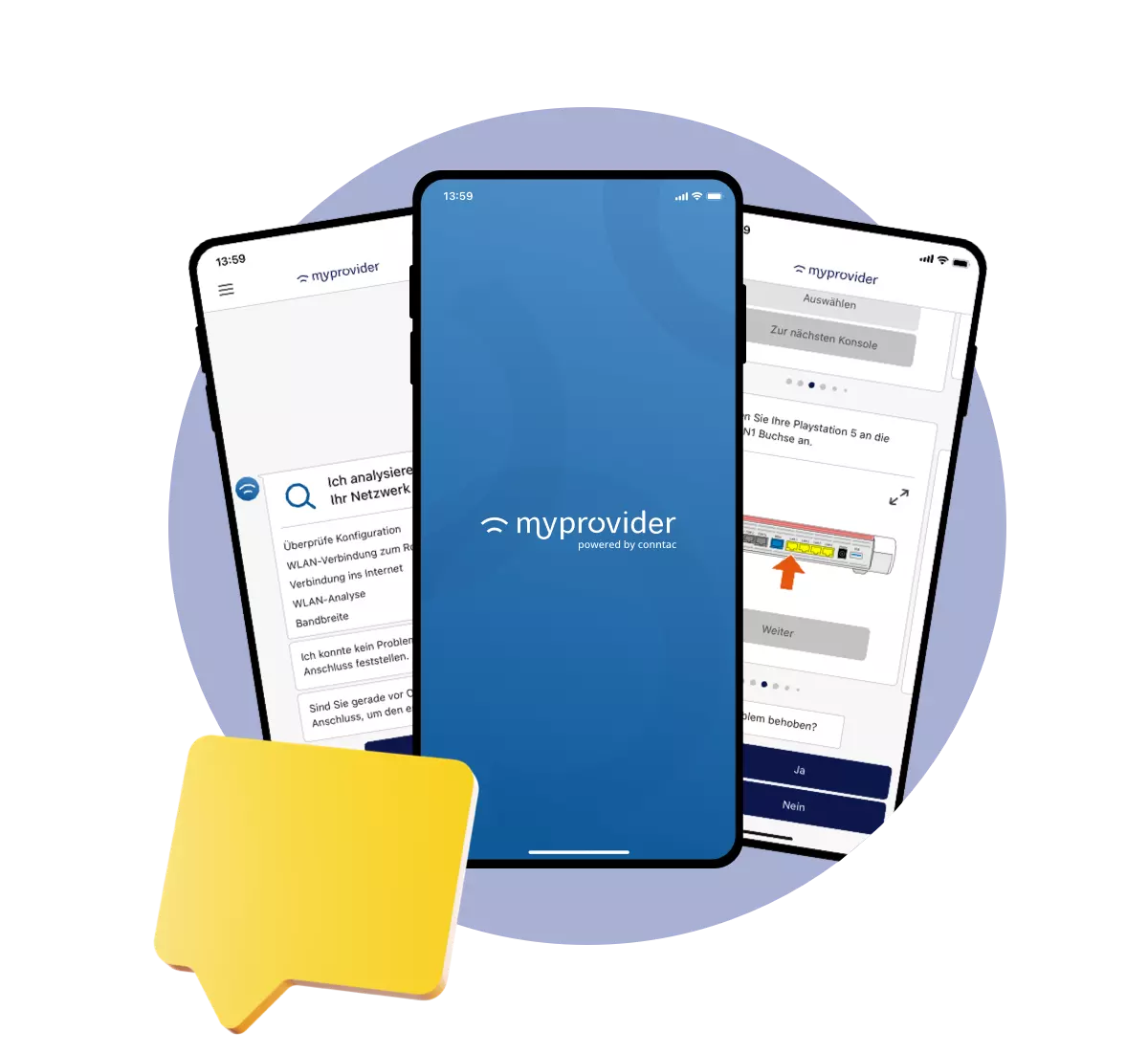
This is also changing the role of customer service. Not every question needs to be answered personally. The key is that the right information is available at the right moment. Self-service not only reduces contact volume but also improves clarity for the customer.
Good information doesn't end with the order
A common mistake is to view the information phase exclusively as the period before a contract is signed. In reality, numerous questions arise afterward as well. For example:
When will my connection be activated?
What preparations do I need to make?
What happens on the day of installation?
When can I start using the connection?
Providing this information early on prevents many follow-up questions and builds trust right up until activation. Information therefore accompanies the entire customer journey.
Conclusion
The take-up rate doesn't start with activation. It begins much earlier. The information phase already influences whether interested parties build trust, understand the process, and take the next step. The more transparently processes are explained, the lower the level of uncertainty, the fewer the follow-up questions, and the lower the drop-off rate. Information is therefore much more than just communication. It forms the first operational lever of a successful take-up strategy. In the next article, we will look at the second step of the journey and show why much more happens between interest and ordering than a classic sales process.
FAQ
Why does information influence the take-up rate?
Clear information reduces uncertainty and facilitates decision-making. This increases the likelihood that interested parties will actually order and activate an available fiber-optic connection.
What information do customers expect?
In addition to technical details, they are primarily interested in the timeline, installation, switching providers, required hardware, and the next steps in the process.
How can the information phase be measured?
Suitable metrics include availability checks, visits to information pages, the use of digital consultation tools, or completed self-service processes.
What role does self-service play?
Digital self-service options provide information at any time, reduce the need for follow-up questions, and provide guidance. In doing so, they support both the customer experience and customer service efficiency.
Read more
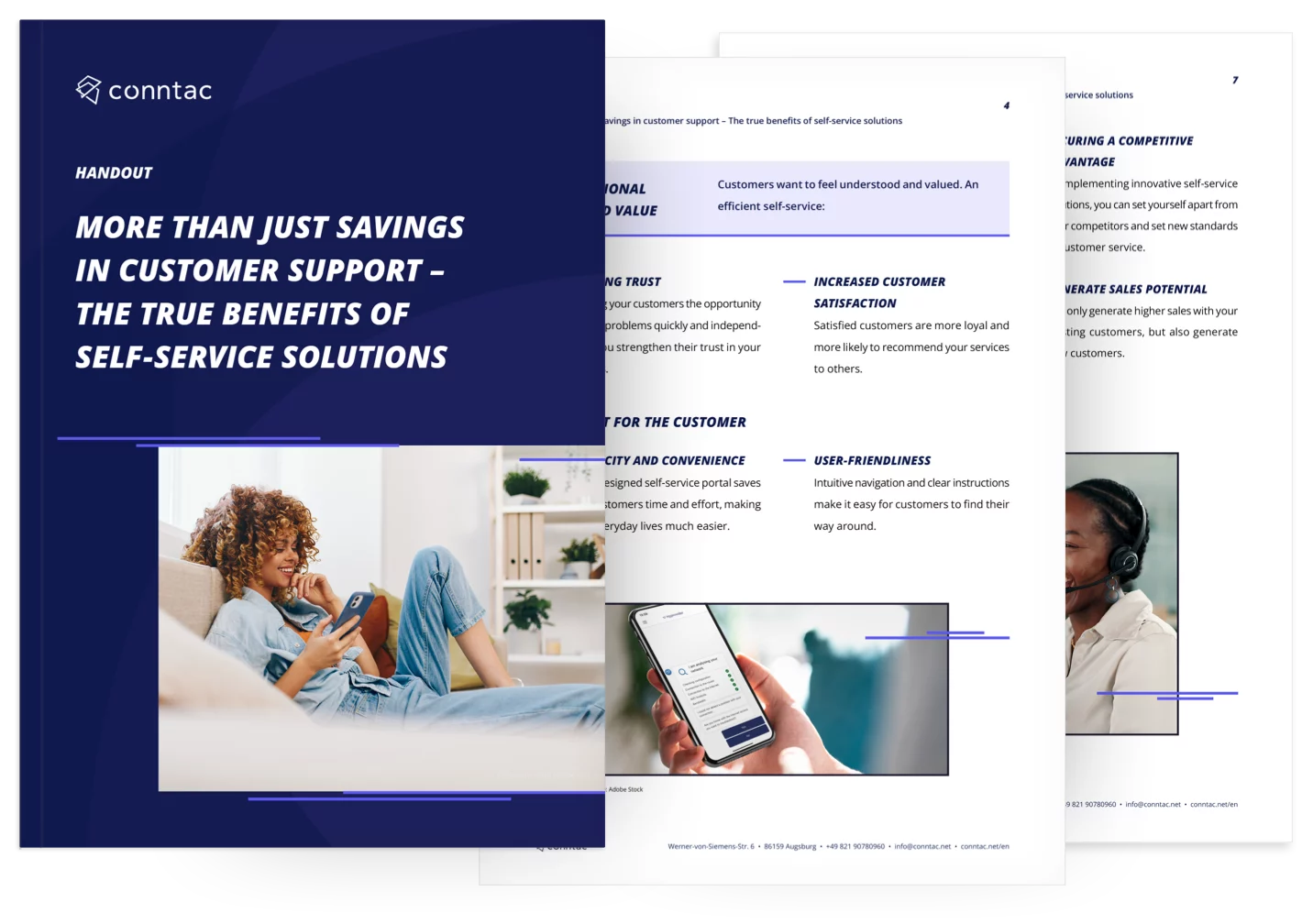
Download our whitepaper Take-up is not created by expansion (DE) and learn how to systematically optimize your entire decision-making process.



.webp "Network expansion is no longer the bottleneck – why the take-up rate determines the success of fiber-optic networks")