Key highlights at a glance
- Technical activation marks the end of the provisioning process, not the customer journey.
- A large portion of support inquiries occur in the first few days after service activation.
- The cause is often uncertainty and a lack of guidance, rather than technical issues.
- Structured self-service reduces effort for both customers and the support team.
- A successful first-time experience builds trust and increases long-term customer loyalty.
The connection is live – but the most critical phase is just beginning
From an internet provider's perspective, activation marks the end of a clearly defined technical process. The order is complete, the line is active, and the connection is ready. For customers, however, this is exactly when the real experience with their new internet service begins. They set up the router, connect their devices, test the Wi-Fi, and check that everything is working as expected. These first few hours shape their initial impression of the provider.
This moment often determines:
- whether the switch is perceived as easy or complicated,
- whether trust is established immediately,
- whether support is needed,
- and how the entire business relationship begins.
Therefore, activation should not be viewed as the end point. It marks the start of the post-activation phase—a phase that directly impacts service costs and customer retention.
Common issues after initial setup
Most inquiries following activation have nothing to do with network outages. They are much more often about everyday uncertainties:
- Where do the cables need to be connected?
- What login credentials are required?
- Why isn't the Wi-Fi working throughout the house yet?
- Is the measured speed normal?
- When can the phone and other devices be set up?
From a technical perspective, these questions are often easy to answer. From the customer's point of view, however, they arise at the exact moment they want to get online as quickly as possible. Even minor uncertainties therefore frequently lead to a call to the hotline. This is precisely why the initial router setup is considered one of the most critical service moments in the entire lifecycle of an internet connection.
Why this phase is particularly support-intensive
After activation, several factors collide at once. Expectations are high. Customers assume that the connection will work immediately. At the same time, they often lack guidance. Information is scattered across various channels:
- Order confirmation
- Welcome letter
- Router manual
- Website
- Hotline
Anyone who finds the wrong information first or doesn't know which step comes next will seek help from customer service. The actual trigger is rarely a technical problem. What is missing is clear process guidance. The more guidance that is required, the higher the customer effort. At the same time, ticket volumes and processing costs increase.
Why the initial user experience determines trust
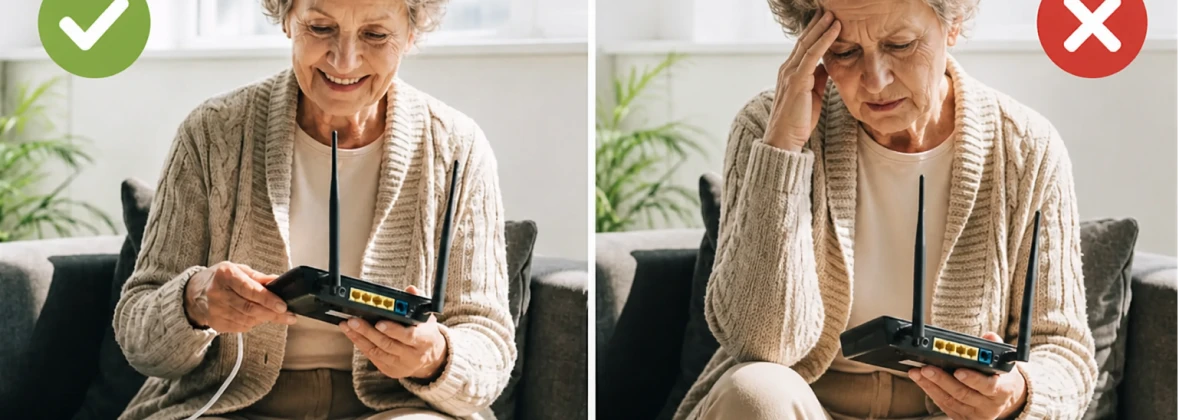
The first few days shape the perception of an internet provider more strongly than many subsequent interactions. If the setup process is straightforward, it creates the feeling that the provider is a reliable partner. Conversely, if uncertainty and waiting times arise, trust is often lost within those first few days. What makes this particularly critical is that many of these negative experiences could be avoided—not by improving technical systems, but by providing customers with guidance earlier on. The customer experience therefore doesn't begin with the first support interaction, but the moment the router is switched on.
What role does First Contact Resolution play?
An important quality indicator during this phase is First Contact Resolution (FCR). It measures the percentage of issues that are fully resolved during the very first interaction. A high First Contact Resolution rate means:
fewer follow-up questions,
lower processing costs,
happier customers,
reduced burden on first- and second-level support.
It is even better, however, when many questions never turn into a support request at all. This is exactly where structured self-service comes in. You can find more on this in our know-how section on First Contact Resolution.
How self-service stabilizes the first few days after activation
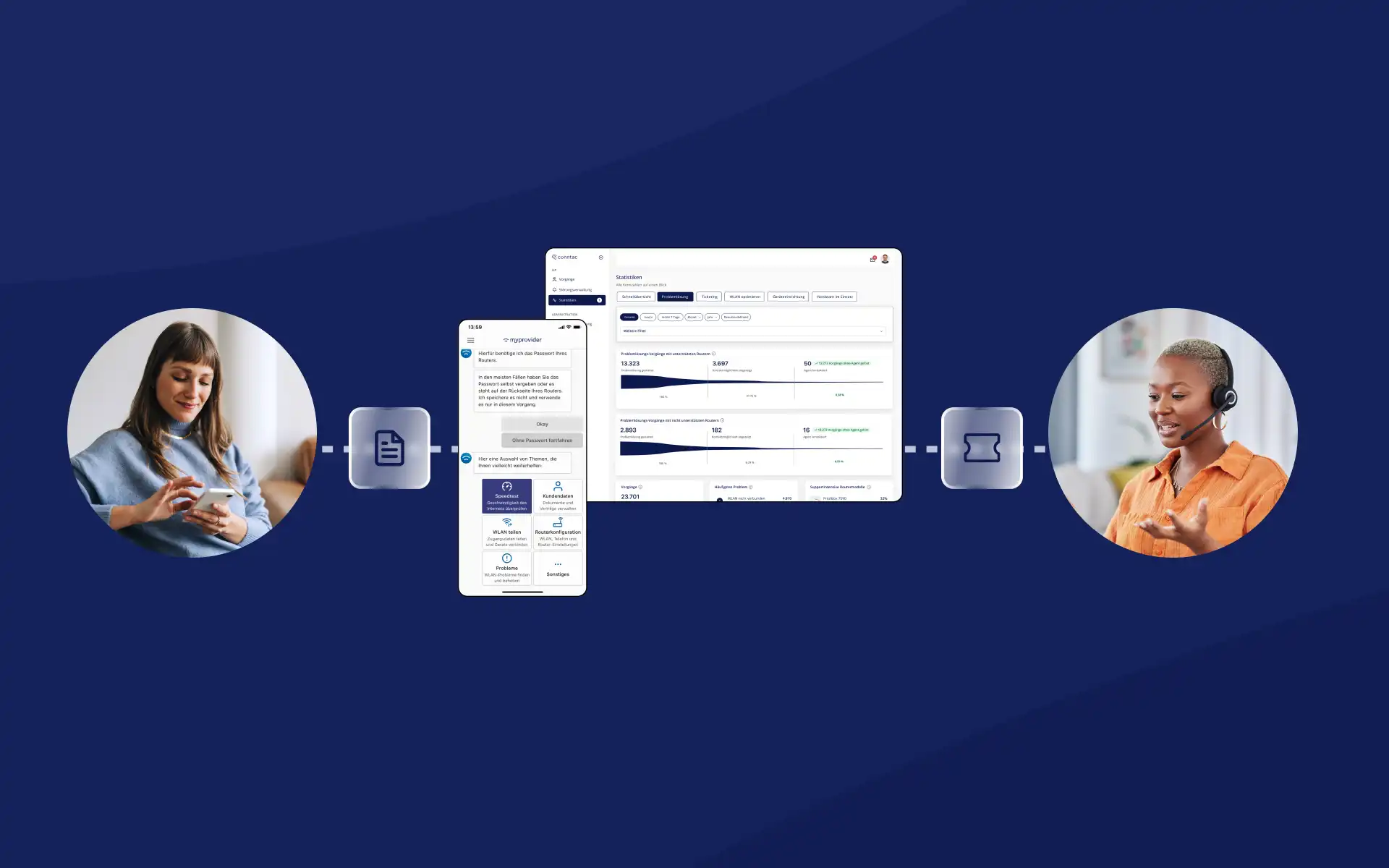
Modern self-service does not replace personal customer support. Instead, it guides customers exactly where they need orientation.
This includes, for example:
- guided initial router setup,
- easy-to-follow, step-by-step instructions,
- automated checks,
- Wi-Fi diagnostics,
- clear, actionable recommendations,
- transparent status updates.
This creates a clear, streamlined process.
Customers don't have to decide for themselves which information is relevant. They are guided through the process. This reduces uncertainty, shortens the path to a working internet connection, and relieves the burden on customer service. For internet providers with high volumes of new activations, self-service becomes a vital component of the service architecture.
Key KPIs internet providers should monitor during this phase
The first few days after activation are easy to measure. In addition to standard ticket volumes, the following metrics are particularly relevant:
These metrics indicate whether the customer journey is stable much earlier than traditional NPS surveys.
Conclusion: Customer loyalty begins immediately after activation
Technical activation marks the end of the provisioning process. However, for customers, this is the exact moment their actual experience with their internet connection begins. By providing structured support during this phase, you reduce support costs, improve the initial user experience, and build trust from the very start. This makes the post-activation phase a commercially significant part of the customer experience.
This is where self-service delivers the most value: it guides customers securely through the initial steps, prevents avoidable support contacts, and ensures a successful start with their new connection.
FAQ
What happens after an internet connection is activated?
Once the technical activation is complete, customers set up their router, connect their devices, and use the service for the first time. This is precisely the phase where many support inquiries arise.
Why do so many support contacts occur after activation?
Customers often lack guidance during the setup process. Technical faults are significantly less common than questions regarding routers, Wi-Fi, or login credentials.
What does the post-activation phase mean?
The post-activation phase describes the period immediately following the activation of a connection. This is the time when support volume, customer satisfaction, and long-term loyalty are determined.
How does self-service help after activation?
Guided setup processes, automated checks, and clear instructions assist customers during their initial use and reduce avoidable contacts with customer support.
Providing targeted support for internet connections after activation
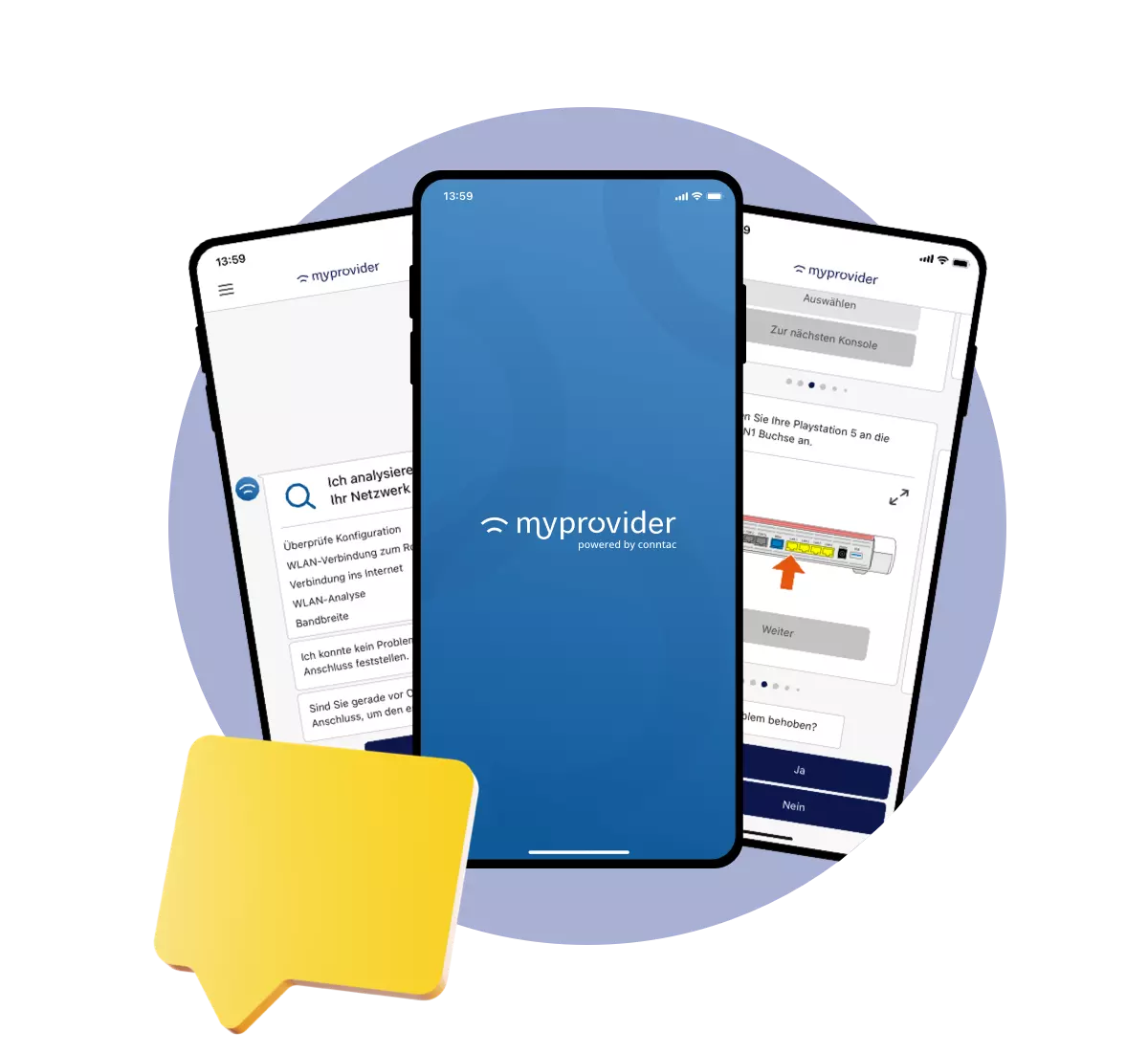
Learn how MyProvider supports customers after activation, provides guidance, and reduces support contacts in the first few days following the switch-on.