.webp "Usage begins after activation")
At a glance
Successful activation does not necessarily mean successful adoption. The first few days and weeks shape the perception of the entire provider. Many support inquiries arise during daily use, not during installation. A good customer experience improves long-term usage and supports a higher take-up rate.
The connection is working – so why are there still support requests?
From a technical perspective, the process is complete. The fiber-optic connection has been activated. The link is live. The router is set up. For many network operators, the project ends here. However, for customers, this is where the actual experience with their new connection begins. Only in daily use does it become clear whether the switch is truly perceived as an improvement.
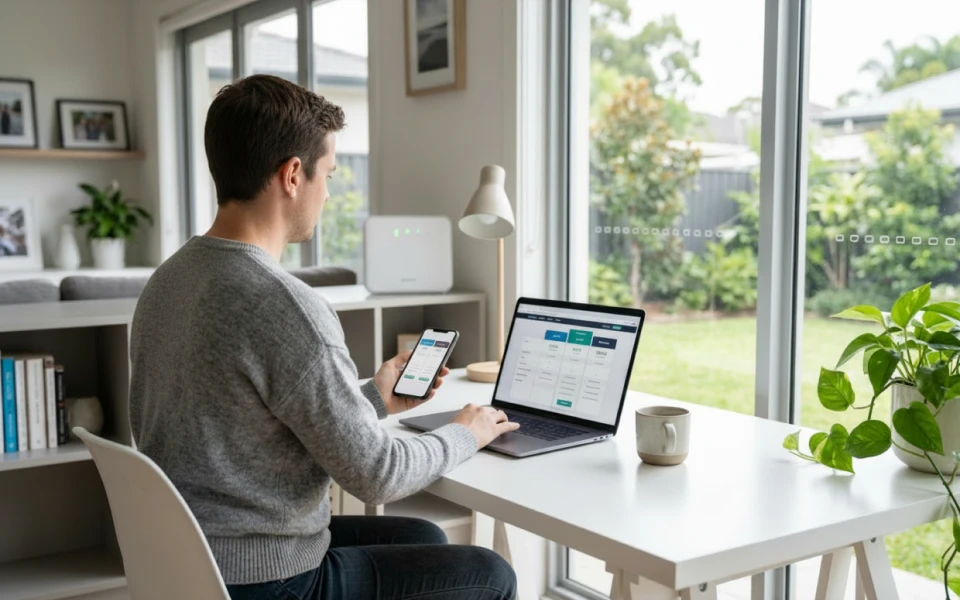
Does the Wi-Fi work in the home office?
Are video conferences running stably?
Is there still reception in the bedroom or garden?
Are all devices connected without issues?
These questions determine how the entire customer experience is evaluated.
Technical availability and usage are two different things
A connection can function perfectly from a technical standpoint and still lead to frustration. A typical example: the fiber-optic connection delivers the booked speed, but the router is poorly positioned in the house. Several rooms have weak Wi-Fi coverage. Consequently, the internet connection is perceived as slow or unreliable. From the network operator's perspective, there is no fault. From the customer's perspective, the connection does not meet expectations. This is exactly where the actual usage phase begins.
The first few weeks determine the customer experience
The first impression is not formed when the contract is signed. It is not formed during activation, either. It is formed during daily use. Typical questions include:
Does the Wi-Fi work everywhere in the house?
Are all devices successfully connected?
Is streaming possible without interruptions?
Is the home office running stably?
Can smart home devices be used without any issues?
Every positive experience strengthens trust in the new connection. Conversely, every uncertainty increases the likelihood of a support request.
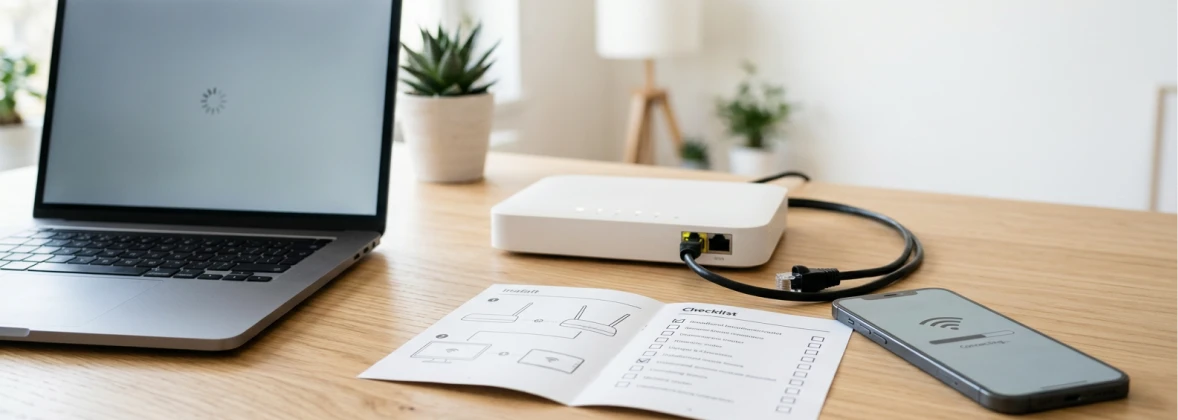
Many problems originate in the home network
A large portion of inquiries following activation do not concern the fiber optic connection itself. Common causes include:
- poor router placement,
- outdated devices,
- inappropriate Wi-Fi settings,
- a lack of knowledge about the home network,
- unrealistic expectations regarding Wi-Fi coverage.
These issues can often be resolved without a technical field visit. However, this requires providing customers with targeted support.
Key metric in focus: Customer Effort
Many network operators measure the technical quality of their connections. Just as important, however, is the question:
How much effort do customers have to put in to successfully use their connection?
The so-called Customer Effort describes exactly this level of effort. The easier the setup, orientation, and troubleshooting process, the higher the satisfaction, the lower the need for support, and the more positively the provider is perceived. Low customer effort therefore has a direct impact on long-term usage.
Self-service doesn't end with activation
Many self-service offerings focus on ordering or setup. However, numerous questions only arise during actual use. For example:
How can I improve my Wi-Fi?
Why isn't my smartphone reaching full speed?
How do I connect additional devices?
Which settings are recommended?
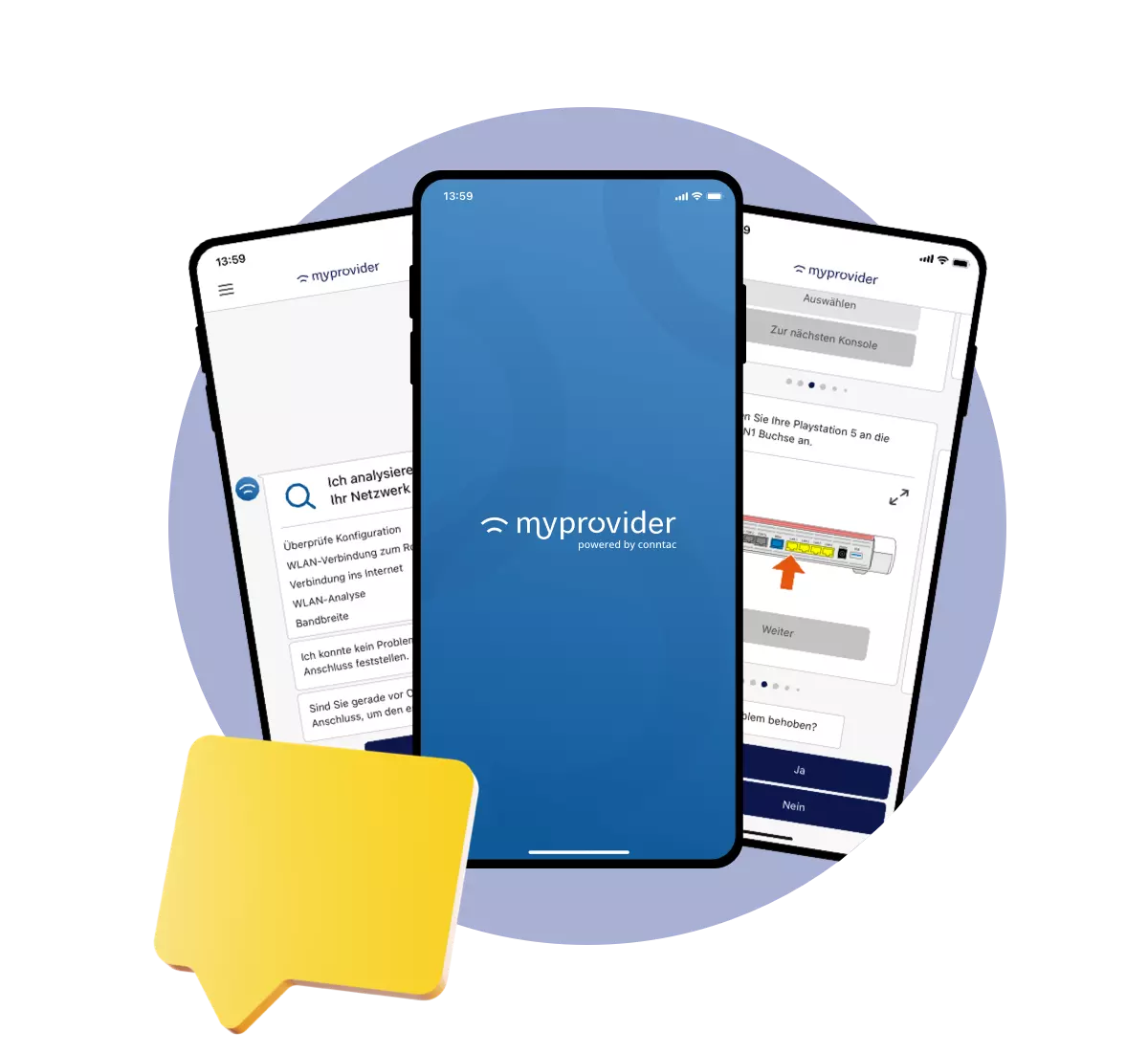
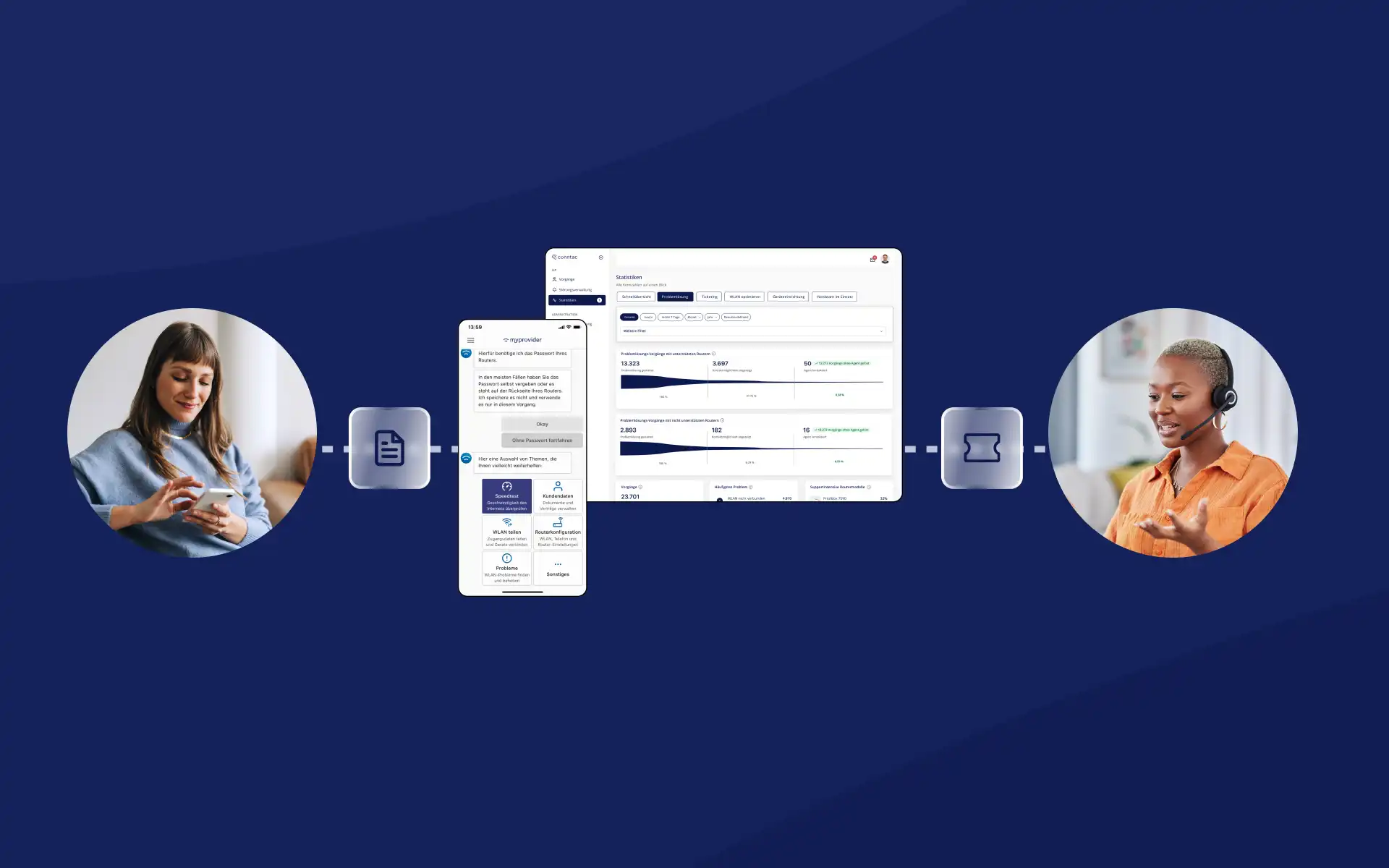
Well-structured self-service offerings therefore support customers even after activation. They help users solve problems independently, optimize their home network, avoid common mistakes, and effectively reduce the burden on customer support. This improves both the customer experience and operational efficiency.
A good customer experience is an economic factor
A positive user experience has an impact that goes far beyond the individual connection. Satisfied customers use their connection long-term, are more likely to recommend their provider, generate fewer support requests, and are more open to additional offers. Conversely, a poor initial experience often has long-term consequences. Even if the fiber-optic connection is technically flawless, the impression often remains that the switch was complicated or disappointing. Therefore, the usage phase should not be viewed as the end of the project, but as the beginning of a long-term customer relationship.
Customer experience is becoming a competitive advantage
As fiber-optic availability increases, the factors that differentiate providers in the market are changing. Speed alone is increasingly insufficient. Many plans are similar. Open-access models are making network infrastructures increasingly comparable. As a result, the user experience is gaining in importance.
The decisive question in the future will no longer be: "How fast is the connection?"
But rather: "How easily does the internet work in everyday life?"
Network operators who provide a convincing answer to this question will create a sustainable competitive advantage.
Usage is the final step of the take-up journey
The take-up rate model deliberately does not end with activation. Economic success is not created by a connected line; it is created by a connection that is used consistently and provides a positive customer experience. Therefore, the usage phase is just as much a part of the take-up strategy as information, decision-making, and activation. Only the interplay of all four phases leads to a sustainable increase in the take-up rate.
Conclusion
Activation is not the end of the customer journey; it is the beginning of actual usage. The first few days and weeks determine whether customers perceive their new fiber-optic connection as a genuine step forward or find themselves contacting support right away. Network operators who actively support their customers even after activation reduce customer effort, lower support costs, and lay the foundation for long-term successful usage. In the final part of our series, we summarize the four phases of the take-up rate model and show where network operators are currently losing the most economic potential.
FAQ
Why do many support requests only arise after activation?
Once the connection is live, customers start using it in their daily lives for the first time. This is when questions about Wi-Fi, router configuration, or connecting additional devices often arise, even if the fiber-optic connection itself is working perfectly.
What role does the home network play?
The home network significantly influences the perceived quality of the connection. Problems are often caused by router placement, Wi-Fi coverage, or end devices—not by the fiber-optic connection itself.
What does customer effort mean?
Customer effort describes the amount of work customers have to put in to achieve their goal. The easier the setup, usage, and troubleshooting process, the more positively the overall customer experience is rated.
Why doesn't the take-up strategy end with activation?
An activated connection only generates long-term economic value if it is used consistently and customers are satisfied with their experience.
Read more
Download our whitepaper Take-up is not driven by expansion (DE) and learn how to optimize the entire customer journey, from availability to long-term usage.