Overview at a glance
- Open-access models make network infrastructures more comparable.
- Bandwidth is increasingly becoming the standard.
- Price remains an important factor, but it hardly creates lasting differentiation.
- Customers evaluate internet providers based on the overall user experience.
- Customer Effort influences satisfaction, loyalty, and support effort.
- Service is evolving from a cost factor into a strategic competitive lever.
Competition in the telecommunications market is changing
Just a few years ago, internet providers could primarily differentiate themselves through their infrastructure. Expansion areas, available bandwidths, and network quality were key competitive factors. Today, this situation is noticeably changing.
Fiber optic expansion is progressing, open-access models are gaining importance, and increasingly, multiple providers use the same physical infrastructure. As a result, customers are increasingly taking high bandwidth availability for granted.
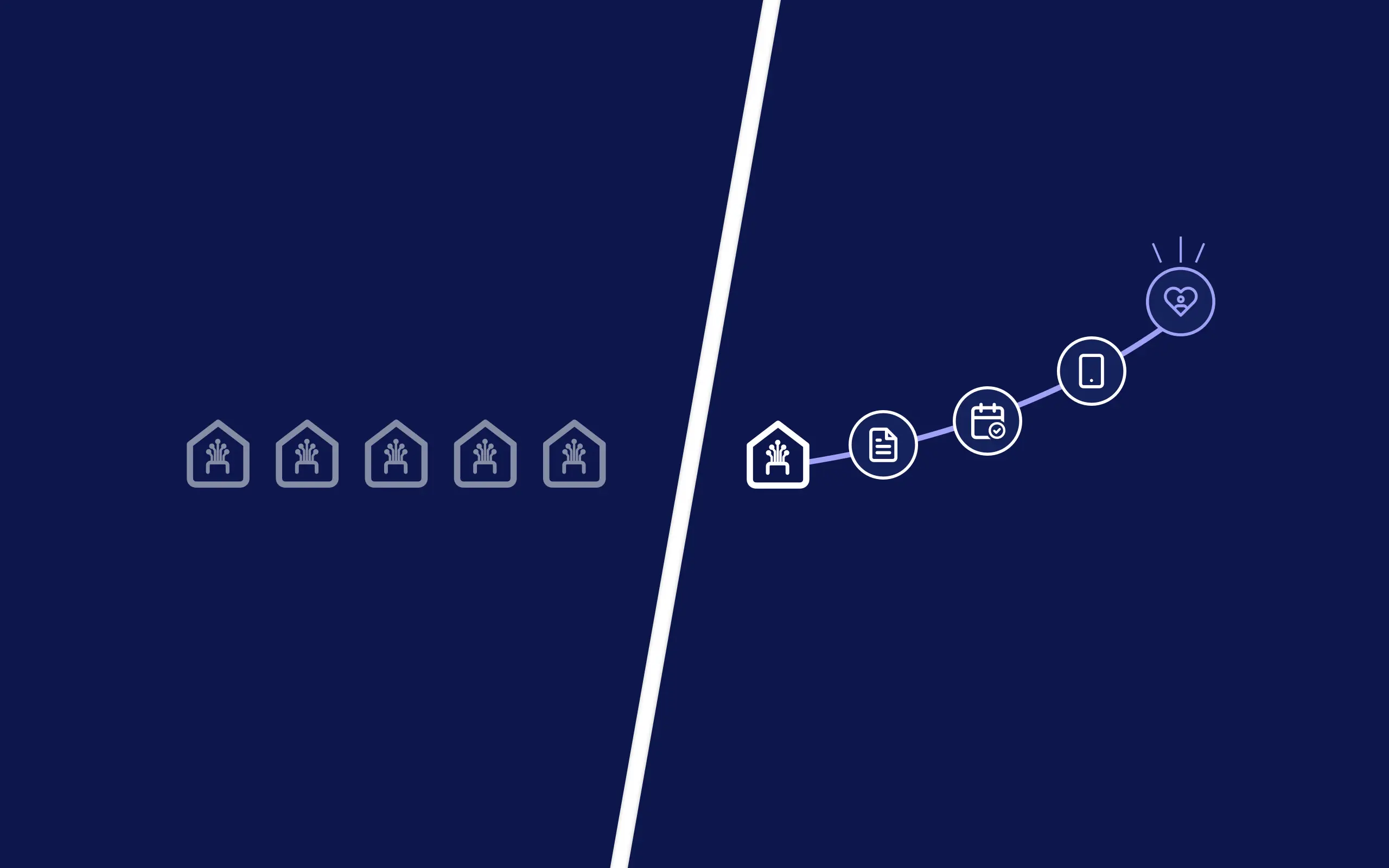
The result: Technical differences are diminishing. Competition is shifting to another level – the user experience.
Customers who can easily set up a connection, quickly resolve issues, and always understand what's happening next perceive their internet provider differently than those who have to navigate between PDFs, hotlines, and waiting queues.
Why Open Access is changing competition
Open Access enables multiple internet providers to access the same fiber optic infrastructure.
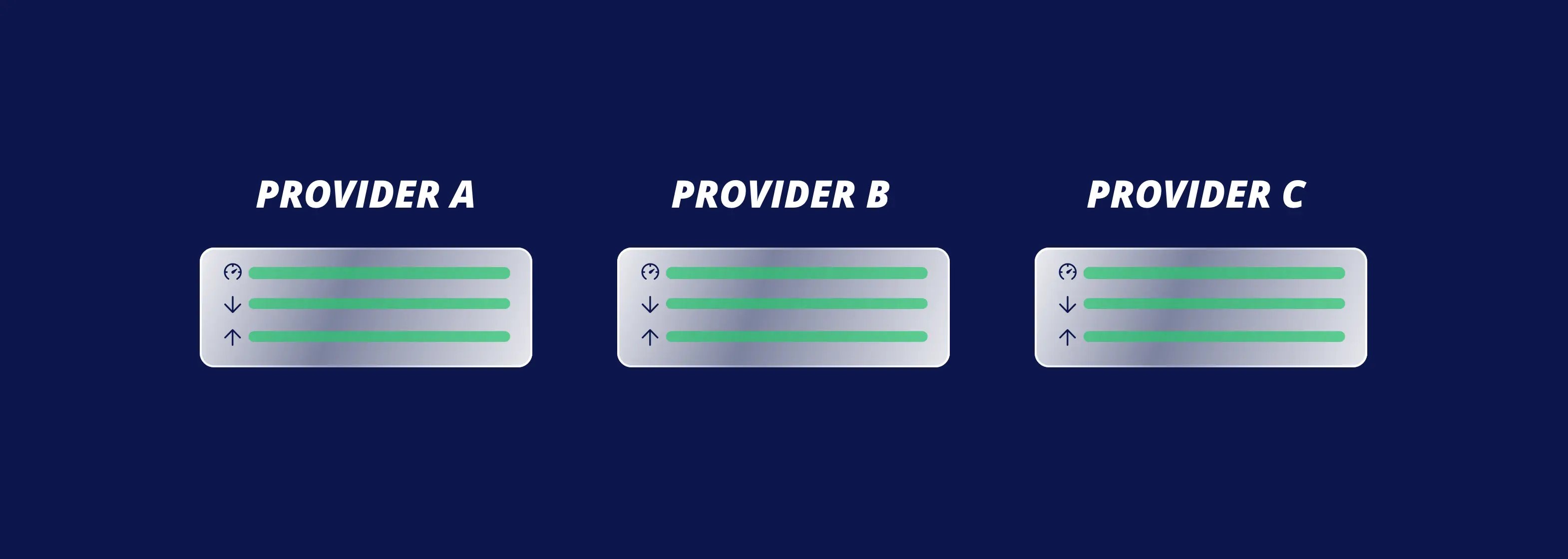
This reduces differences in network coverage and technical performance. From a customer perspective, multiple providers often offer almost identical products.
When bandwidth and infrastructure become comparable, other factors gain importance:
- How easy is the setup?
- How quickly can I get help?
- How clearly are problems explained?
- How much effort is required in daily use?
The competition thus shifts from infrastructure to customer experience.
Why traditional differentiating factors are losing their impact
Many providers continue to invest primarily in three areas:
- Expansion
- Speed
- Price
These factors remain important. However, they are increasingly insufficient to build long-term customer loyalty.
An example:
Provider A offers a 1 Gbit/s connection via an open-access network. Provider B offers the same connection via the same infrastructure. Price and performance hardly differ.
Why should a customer choose one of the two providers long-term?
The answer is increasingly less about the network itself, and more about the service.
Why Price Doesn't Create Lasting Differentiation
Price remains an important decision criterion. However, it has limited suitability as a lasting competitive advantage. Discounts can be copied quickly, and margins simultaneously decrease.
A positive user experience, on the other hand, is much harder to replicate because it consists of many individual processes – from setup and customer service to long-term support.
What Does Customer Experience Mean in the Telecommunications Market?
Customer experience describes all interactions customers have with their internet provider – from signing the contract and initial router setup to troubleshooting.
In the telecommunications market, customer experience is therefore not only created in customer service. It is created along the entire customer journey.
Key questions include:
- How easy is the setup?
- How transparent is the activation process?
- How quickly can I find help?
- How clearly is a problem explained?
- How many steps do I have to complete myself?
Today, customers don't just compare products. They compare the effort they have to put in to successfully use these products.
Customer Effort becomes a crucial metric
Many companies have been measuring metrics like customer satisfaction or Net Promoter Score for years. These values remain relevant. However, they often only explain the outcome. The real leverage point is earlier.
Customer Effort describes the effort customers must invest to achieve their goal.
In the telecommunications market, this includes, for example:
- Activating fiber optic
- Setting up a router
- Optimizing Wi-Fi
- Reporting disruptions
- Accessing status information
The lower this effort is, the less frequently uncertainty, questions, or frustration arise.
This makes Customer Effort a metric that can be actively shaped.
Why Service is Becoming the New Differentiator
As infrastructure becomes increasingly comparable, the role of customer service inevitably changes.
What becomes crucial is
- how quickly guidance is provided,
- how transparent processes are,
- how well systems work together,
- how easily customers achieve their goals.
Service no longer just accompanies the product; it shapes the product experience.
What we've learned from millions of self-service interactions
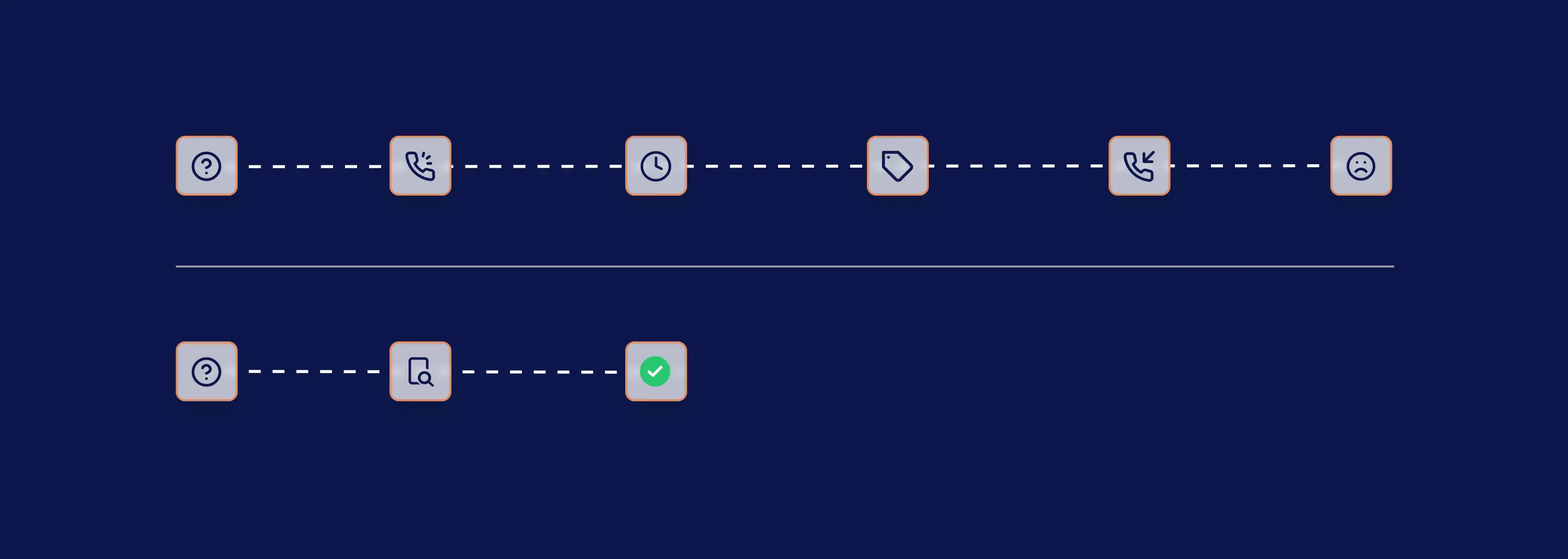
Most service contacts don't arise due to technical defects. They arise because people are uncertain.
Typical triggers include:
- lack of guidance,
- unclear next steps,
- uncertainty after activation,
- lack of transparency in the process.
These very situations lead to calls, tickets, and escalations.
Therefore, the actual task of modern service processes is not to handle as many inquiries as possible. It consists of preventing uncertainty from arising in the first place.
Successful self-service does not shift work onto customers. It reduces unnecessary uncertainty.
Why Self-Service Is Not a Staff-Saving Technology
Self-service is often equated with cost reduction. This perspective falls short. Fewer support contacts don't arise because tasks are offloaded to customers. They arise where processes become clearer and people reach their goals faster.
This benefits both sides:
- Customers get guidance faster.
- Service teams can focus on complex cases.
Service Impacts More Than Just Customer Service
The impact goes much further.
A good user experience improves, among other things:
- fiber optic activation,
- the take-up rate,
- the time-to-revenue,
- long-term customer retention.
Service thus becomes an economic factor – not just an operational task.
What this specifically means for internet providers
For internet providers, this results in clear areas of action:
- View service as a strategic asset.
- Integrate customer experience as a component of the product strategy.
- Actively measure and reduce customer effort.
- Develop self-service as an integral part of the customer journey.
- Consistently align support processes with guidance and transparency.
Conclusion
The telecommunications market is evolving from an infrastructure competition to a competition based on experience.
Many providers will use the same networks and offer comparable bandwidths in the future. Differences arise where customers actually experience their connection – during setup, activation, and in daily service.
Those who simplify these moments create a competitive advantage that cannot be replicated by price alone.
FAQ
What does Customer Experience mean in telecommunications?
Customer Experience encompasses all experiences customers have with their internet provider – from booking and setup to troubleshooting.
Why is network quality no longer enough as a competitive advantage today?
With fiber optic expansion and open-access models, technical differences are diminishing. The user experience is therefore gaining importance.
What is Customer Effort?
Customer Effort describes the effort customers must invest to resolve an issue. The lower this effort, the higher their satisfaction and loyalty.
Why is self-service becoming more important for internet providers?
Well-designed self-service reduces uncertainty, improves the customer experience, and relieves the burden on customer service by answering common questions before a support contact is even made.