Self-service: Why customers help themselves
Blog

Understanding self-service

02.12.2025

When customers prefer to help themselves and companies benefit twice

When did you last ask Google or ChatGPT first – and not the hotline?

Perhaps it was a faulty WiFi connection, a software error, or setting up an incomprehensible device. Before we call anyone today, let's look for the answer ourselves. This is no longer a coincidence, but part of a profound change: Customers don't want to wait – they want to act.

From hotline age to self-service culture

Just a few years ago, self-service was considered an additional offer. It is standard today. According to a Salesforce study 61% of customers prefer to solve simple problems themselves rather than contact support. And it is no coincidence that 80% of top service companies already rely on self-service – compared to just 56% of the less successful ones.

Self-service means control, speed, and trust. Instead of passively waiting for answers, customers can take action and solve their problem at their own pace. This is also changing the relationship between companies and customers: Whoever is understood stays.

Read more about this in the blog post: A sense of success with self-service – repairing makes you happy

From enthusiasm to basic factor

The KANO model describes how expectations are shifting. Self-service used to be an “inspiration” – a bonus that surprised. Today, it is one of the basic factors: If it is missing, frustration results.

An example: In the past, it was considered innovative when customers were able to set up the router themselves. Today, it is expected. The digital transformation has redefined the standard: It is not the existence of an offer that counts, but how simply it works.

Success factors for effective self-service

For self-service to be truly used, four principles must be met:

1. Transparent user guidance
Step-by-step instructions, clear language and visual aids are crucial. Customers don't need technical terms, but guidance.

2. Offline functionality
Self-service must work even if the problem involves the Internet. Offline modes or local data storage are not a luxury, but a requirement.

3. Seamless integration
Self-service must not be a parallel universe. It must be part of the service landscape – closely interlinked with chat, portal and hotline. If an issue cannot be resolved digitally, the transition to support should be automatic and loss-free.

4. Feedback & data backflow
Each use provides valuable insights into which questions arise and where processes snag. This data improves products and relieves support over the long term.

Digital first – with a human touch

A common misconception is that self-service replaces people. The opposite is true – it creates space. Routine issues are resolved automatically so that service employees can concentrate on complex cases that require empathy and tact.

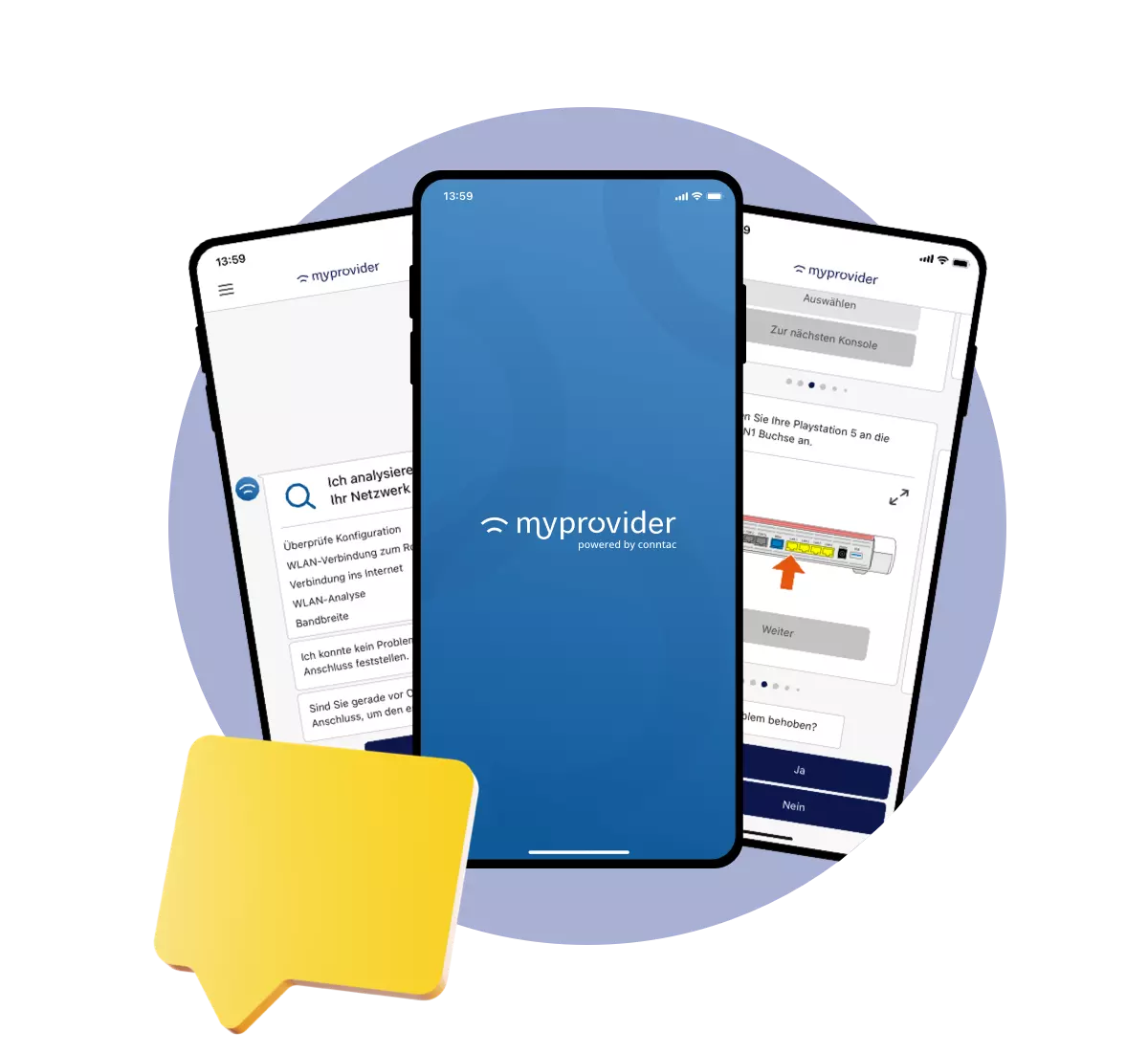
In the MyProvider App self-service, for example, never ends abruptly: If a problem cannot be solved, it is automatically handed over to support – including all information that has already been collected. No repetitive explanations, no frustration.

The result is a hybrid model in which technology takes over routine and creates trust for people.
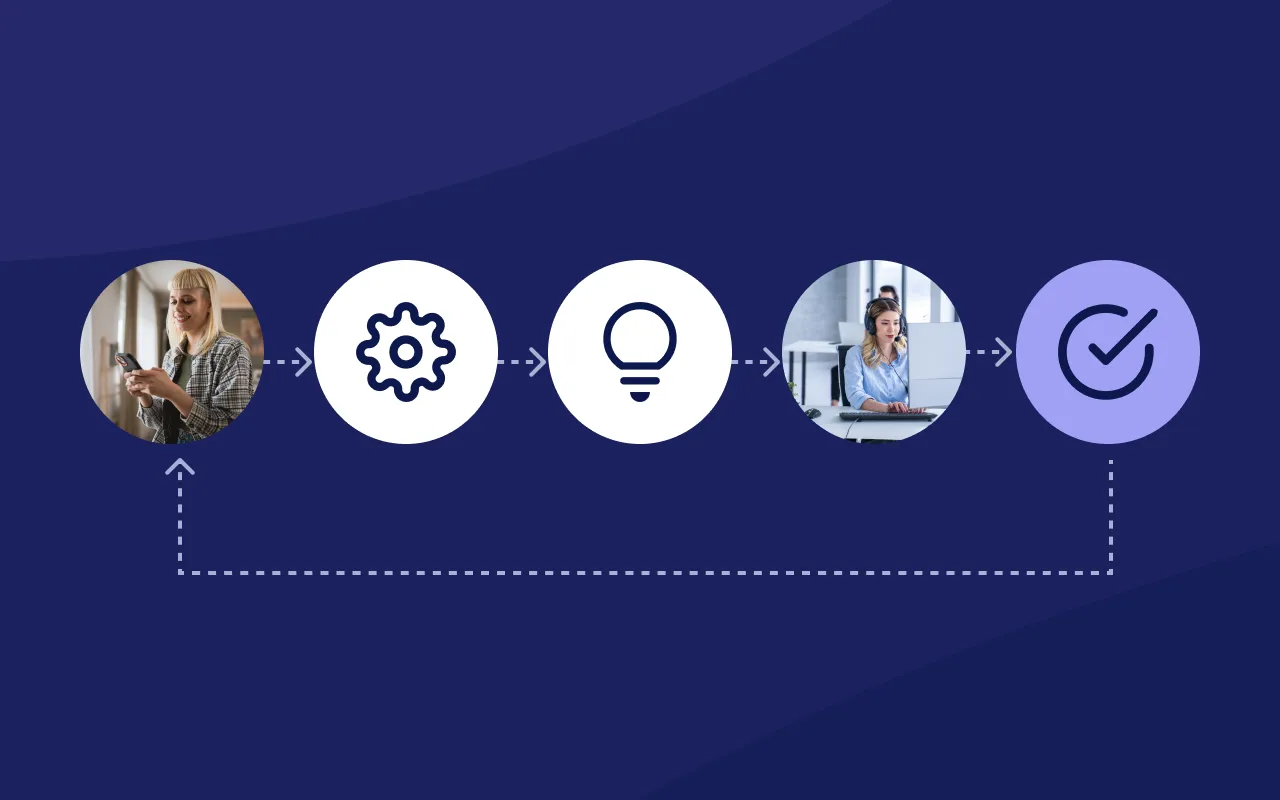
The continuous self-service cycle

With the solutions MyProvider and Entry Conntac shows how self-service works along the entire service chain:

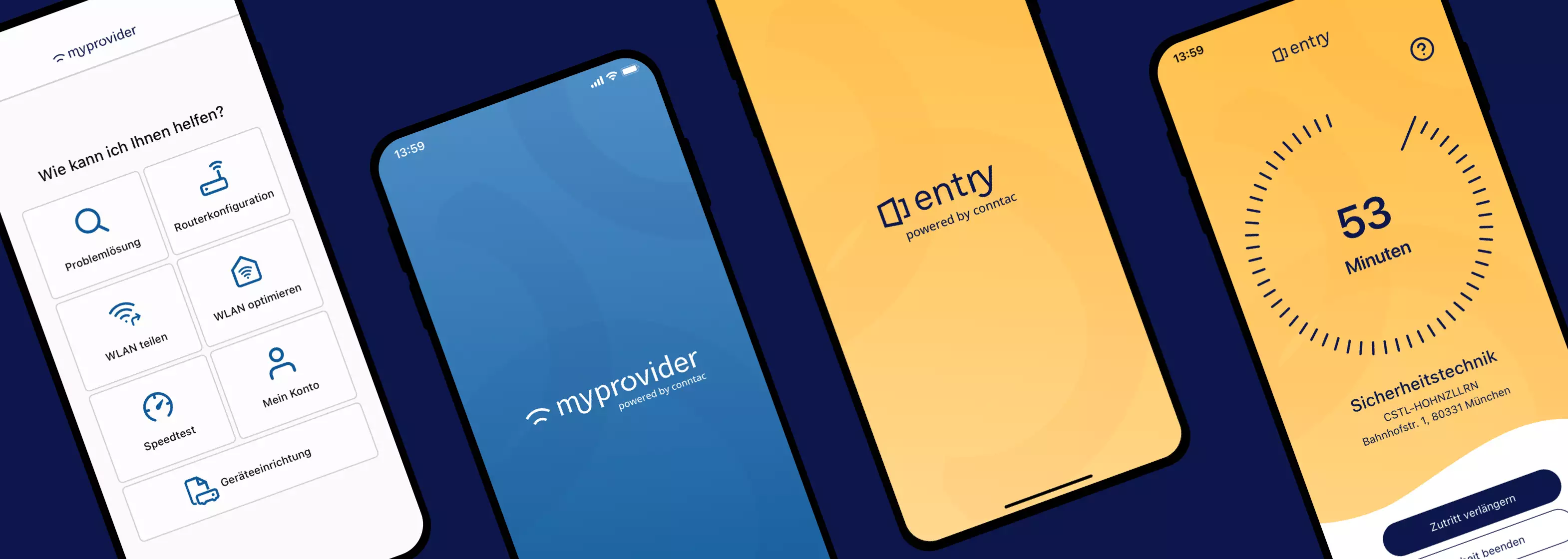
  • MyProvider helps end customers set up and solve problems – step by step, intuitively and available at any time.
  • Entry ensures efficiency and security in field service on the company side – with digital check-ins, live monitoring and automatic alerting.

The result: A continuous flow of information between customers, service and sales representatives – without media breaks, without double effort.

Conclusion: Self-service is cultural change, not a tool

Self-service isn't software, it's an attitude. It's about empowering people – not replacing them.

Companies that think about self-service win twice: They create more efficient processes and at the same time strengthen the trust of their customers.

You can find examples on our References page.

Online talk on the topic

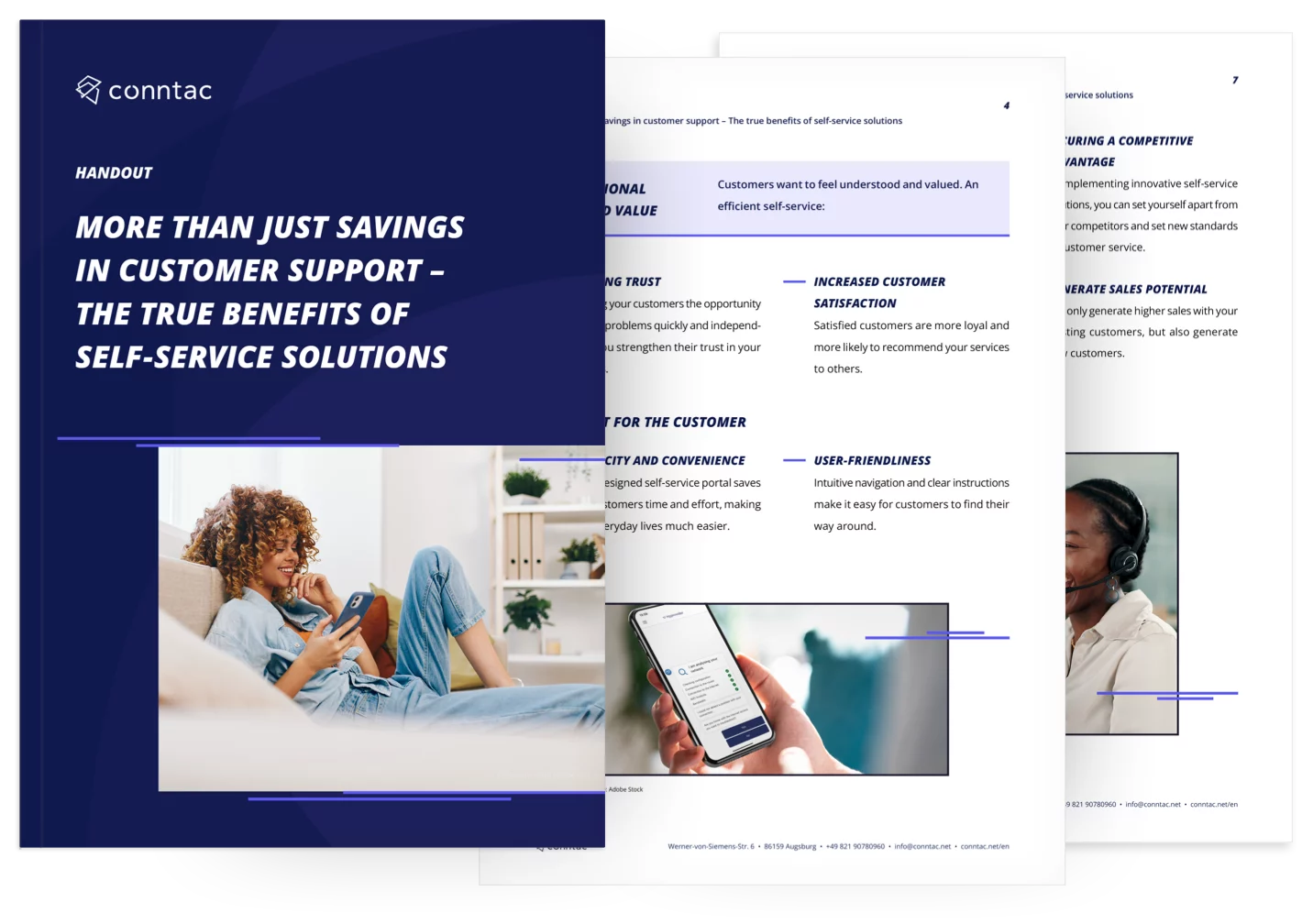
Watch the appropriate talk with Dario and get further information in the playbook: “Understanding self-service – How customers are taking action themselves today”

Learn how MyProvider and Entry make self-service a reality – for satisfied customers and relieved teams.

Frequently Asked Questions about Self-Service in Customer Support

What does self-service mean in customer support?

Self-service in customer support refers to digital options that allow customers to resolve issues on their own, such as router setup, Wi-Fi optimisation, or basic troubleshooting. The goal is to solve problems quickly without waiting times or direct contact with a hotline.

Why is self-service considered a basic requirement today?

Customers now expect information and solutions to be available immediately. According to the KANO model, missing self-service no longer leads to mild disappointment but to clear frustration. For internet providers, this means service quality is perceived as lower when self-service is not available.

How does self-service work in customer support for internet providers?

In customer support for internet providers, self-service is typically delivered through apps or customer portals. Customers receive step-by-step guidance, status updates, and help with issues related to their internet connection. If a problem cannot be solved digitally, it is handed over to support without losing information.

What are the benefits of self-service for ISPs?

Self-service reduces the workload for support teams, lowers the number of follow-up requests, and shortens handling times. At the same time, it provides data on recurring issues and unclear processes. These insights help ISPs improve services and reduce support effort over time.

Why is an offline mode important for self-service?

Many service requests occur when the internet connection is not working. An offline mode ensures that instructions and guidance remain accessible in these situations. Without offline availability, self-service fails exactly when customers need it most.

Does self-service replace personal support?

No. Self-service mainly covers recurring and simple requests. This allows support agents to focus on complex cases where personal assistance and experience matter. Effective models connect self-service and human support as part of one process.

What is a continuous self-service loop?

A continuous self-service loop connects customers, support teams, and field service through a shared flow of information. Data collected during self-service is available to support and can be passed on to field service if required. This avoids media breaks and repeated explanations.

Photo of Johanna Kugler
Johanna Kugler

Content Marketing Manager

Other ARticles

A woman throws her arms in the air with joy, she laughs and there is confetti in front of her
18.07.2023

A sense of achievement with self-service – repairing makes people happy

Do you know this feeling of pride and the associated feeling of wanting to report it to those around you? It is about the phenomenon of having repaired an appliance or other everyday object independently – without help.

Zum Blogbeitrag
Several agents sit in a customer service centre
07.06.2023

Being even closer to customers with self-service apps

It cannot be stressed often enough how important it is to gather customer feedback. Customer feedback and general personal contact with customers is instrumental in providing excellent customer service.

Zum Blogbeitrag
A robotic hand and a human hand touch each other with their index fingers
08.03.2024

Customer service: balancing technology and humanity

In today's fast-paced world, customer satisfaction is a decisive factor for the success of a company. A balance must be struck between technology and humanity.

Zum Blogbeitrag
A mobile phone in one hand
04.05.2023

Are service apps sustainable?

Service apps don’t save the world – sure – but they give companies the opportunity to support their customers faster and more efficiently. But are service apps sustainable? Can this technology help reduce the environmental impact of businesses?

Zum Blogbeitrag
An agent sits in the customer service centre with her hands in front of her face
11.04.2023

Monday Peak in Customer Service

Mondays are an unpopular day for many people. The weekend is over, the working week begins and the alarm clock rings far too early. However, Mondays can become a challenge not only for employees, but also for companies – especially in customer service.

Zum Blogbeitrag
UX customer service invisible trust
09.12.2025
Neu

Why good UX is invisible and how it creates trust

An elegant button is useless if the process behind it is incomprehensible. Good UX means: Technology fades into the background and everything simply works.

Zum Blogbeitrag

Become a Conntac Insider

Subscribe to our LinkedIn newsletter The Conntac Chronicles to receive relevant insights and perspectives on current topics and challenges in the field of modern service solutions.

A woman high fiving another person