Product complexity increases – internal clarity becomes a bottleneck
Fiber-optic expansion is progressing, open access models are increasing, system landscapes are becoming more modular and feature releases are taking place in shorter cycles. For Internet providers, this means that technical performance is growing — as is internal complexity.
At the same time, management, product management, service and operational teams work with the same solutions — but often with different levels of information. Knowledge about booked features, configurations or new functions is available, but not always centrally accessible or currently documented.
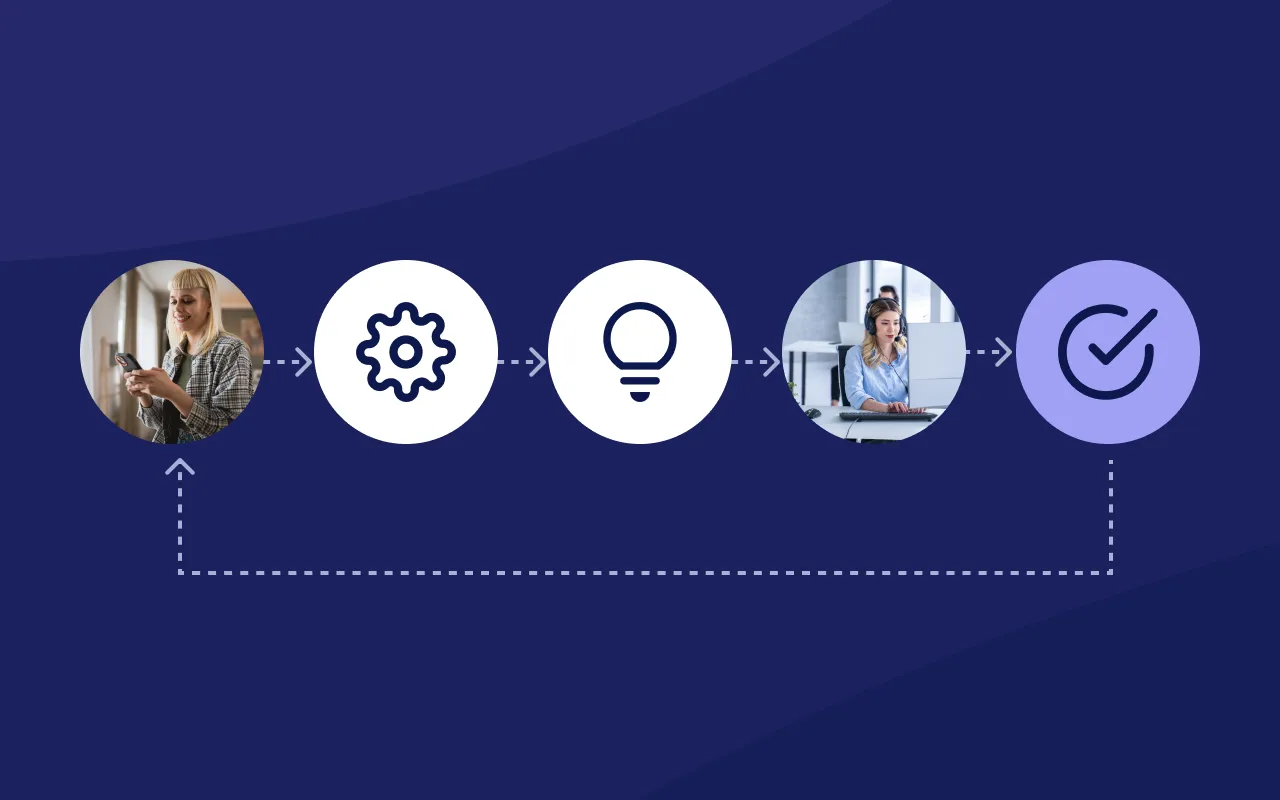
The result is friction: inquiries in everyday life, coordination efforts between teams, uncertainty among new employees or delayed use of available functions. It is not the product that becomes a problem — but the lack of structure around the product knowledge.
Why a knowledge base for ISPs is more than documentation
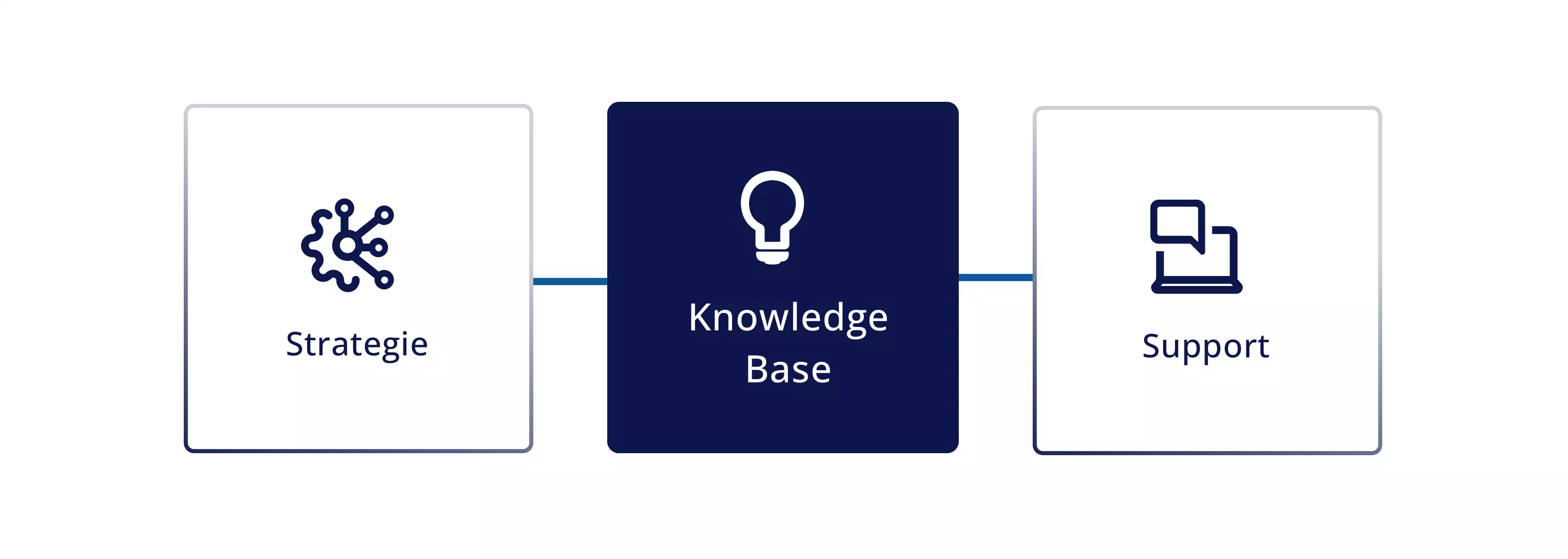
A knowledge base is often understood as a collection of digital documents. For ISPs, however, it can be much more: a structural basis for transparency, stability and scaling.
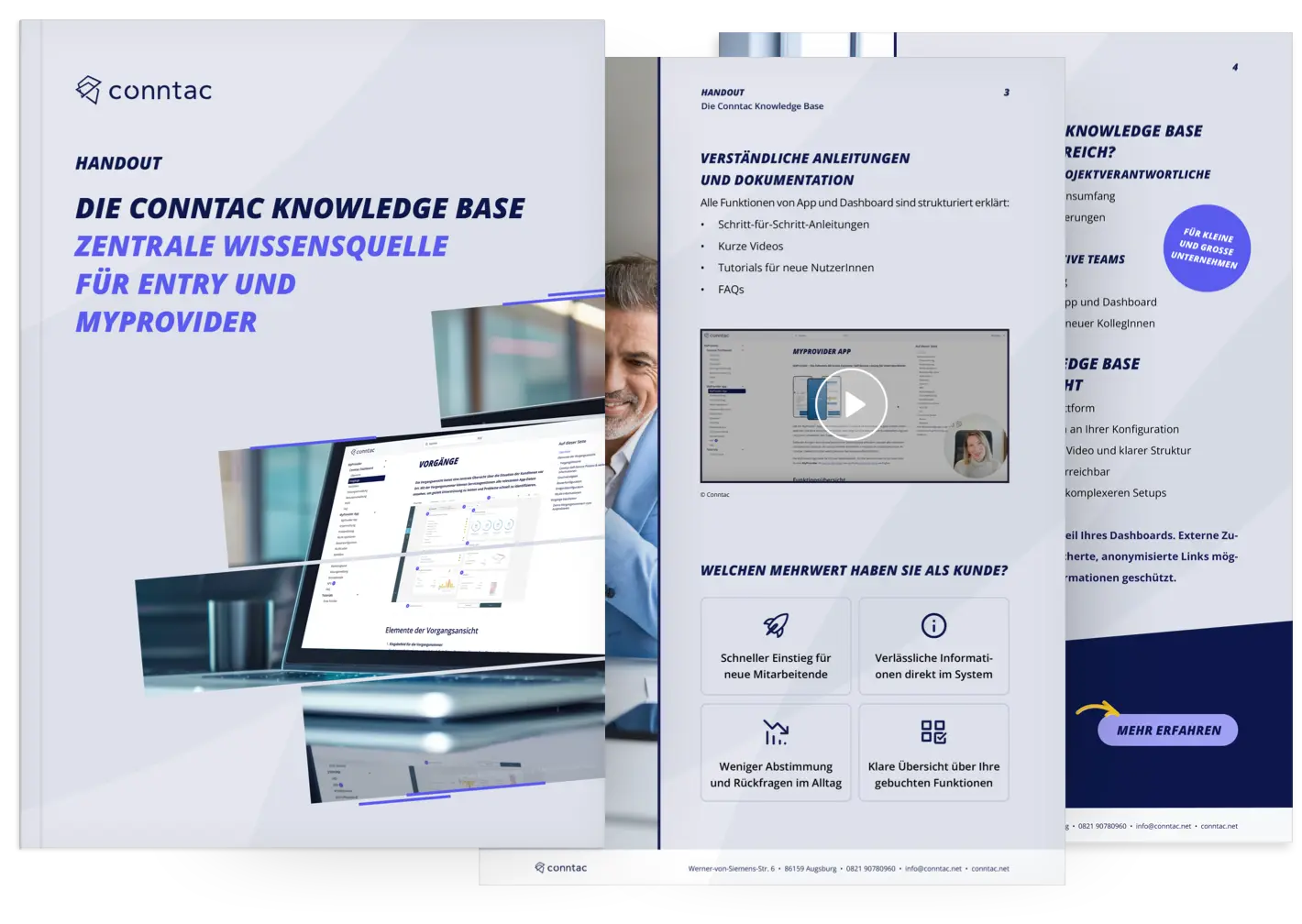
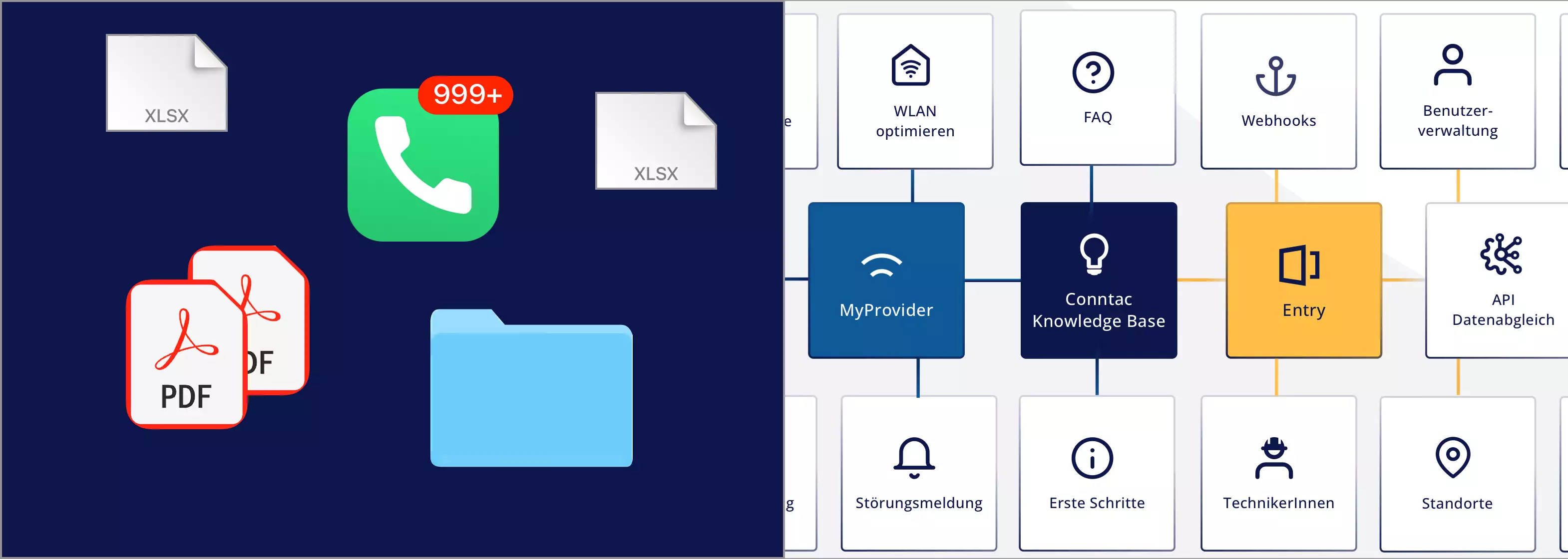
When all product-relevant information is bundled directly in the dashboard, a central reference point is created. Teams can see at a glance which solutions are in use, which features have been booked and what the individual configuration looks like. When supplemented with structured guides, videos, and FAQs, this creates a cohesive knowledge system rather than a static archive. This structure forms the foundation for a guided self-service experience that translates that knowledge directly into interactive solution steps for customers.
Especially in complex organizations with multiple projects or parallel expansion phases, this central structure becomes a connecting element. Decisions are based on clear information, not on individual notes or distributed document statuses.
Scaling requires knowledge structure – not just technology
Many ISPs are faced with the challenge of continuing to grow with limited resources. New customers are being added, projects are running in parallel, systems are continuing to develop. At the same time, it is hardly possible to build up additional staff for each new phase.
In this environment, structured product knowledge becomes a lever. A centrally maintained knowledge base ensures that knowledge is not tied to individual people. New employees find structured information, support teams can safely look up functions, and project managers keep track of booked features and configurations.
Scalability is thus achieved not only through technology, but through a clear information architecture. Coordination costs are reduced, training times are shortened and operational processes become more stable.