Why service is more than just problem solving
A hotline call, a support request or a request for better WiFi – these are relationship moments, not just technical tasks. In these seconds, it is decided whether customers build trust or drop out.
Service is now the most important point of contact where companies make appreciation visible – and trust is measurably created. It is not a cost factor, but an expression of an attitude.
What exactly does “respectful service” mean?
Appreciation in customer service is rarely shown in grand gestures, but in many small details that convey the feeling: “I'm taken seriously. ”
Availability & accessibility:
Customers expect quick, reliable help – often around the clock. With digital self-service, these expectations can be met: Support at any time, regardless of hotline hours.
Clear and empathetic communication:
Technical jargon and phrases seem unapproachable. Whoever answers in an understandable, friendly and solution-oriented manner instead shows respect – and builds closeness.
Proactive problem solutions:
Modern systems detect faults before they escalate – for example through automatic WiFi optimizations or notifications in the app, which signals: “We'll take care of it before you need us.”
Why appreciation in service is measurable
Emotional customer proximity can be summarized in figures for a long time. The Customer Effort Score (CES) shows how easy it is for customers to solve their concerns – the less effort they feel, the higher their satisfaction.
Companies that rely on proactive, appreciative service experiences are demonstrably achieving higher loyalty rates and lower conversion rates.
Further: Read more about the topic in the article Customer Effort Score (CES) – When simplicity is decisive over loyalty.

Self-service as an expression of customer focus
Many companies are using self-service tools to reduce support costs. But the real value lies elsewhere:
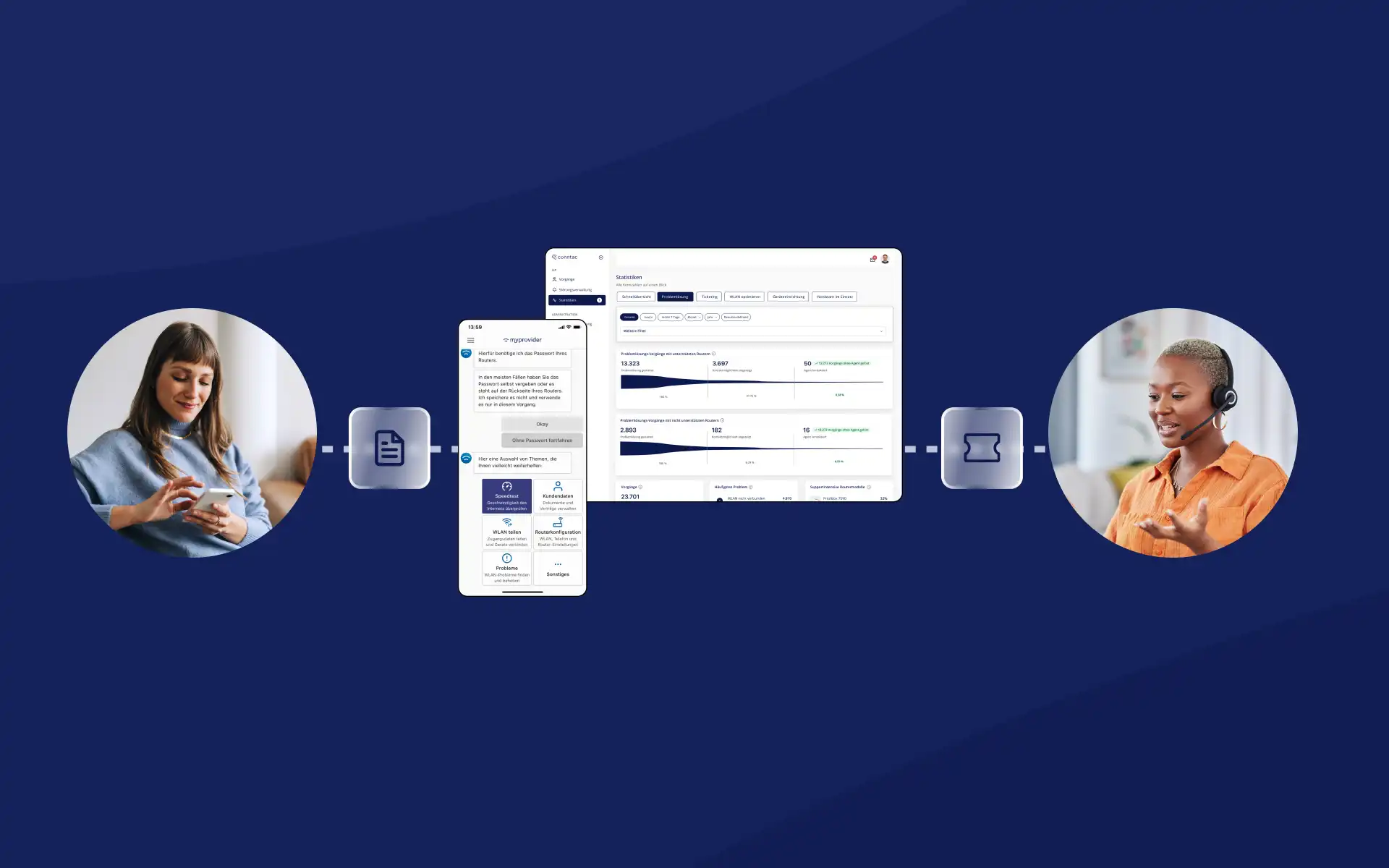
Digital self-service solutions give customers self-determination and security. A tool like MyProvider enables Internet providers to deliver on a clear promise – transparency, control, and trust. Instead of waiting loops, there is direct help, instead of uncertainty, clear step-by-step instructions. Technology thus becomes a link between service efficiency and emotional closeness.
Figures that show how service creates trust
Willingness to switch in the event of poor service:
According to the study State of Digital Customer Experience 2024, 70% of customers stated that they would switch providers after a negative service experience.
→ Bad service isn't just annoying – it's a real competitive disadvantage.
Service as a purchase criterion:
According to the Customer Service Barometer 2025, 52% find service quality more important than advertising or price; 91% say that good service shapes the company image.
→ Service is not an add-on, but part of the brand identity.

What companies actually gain
- Loyalty & Retention: Anyone who feels understood stays – and continues to recommend.
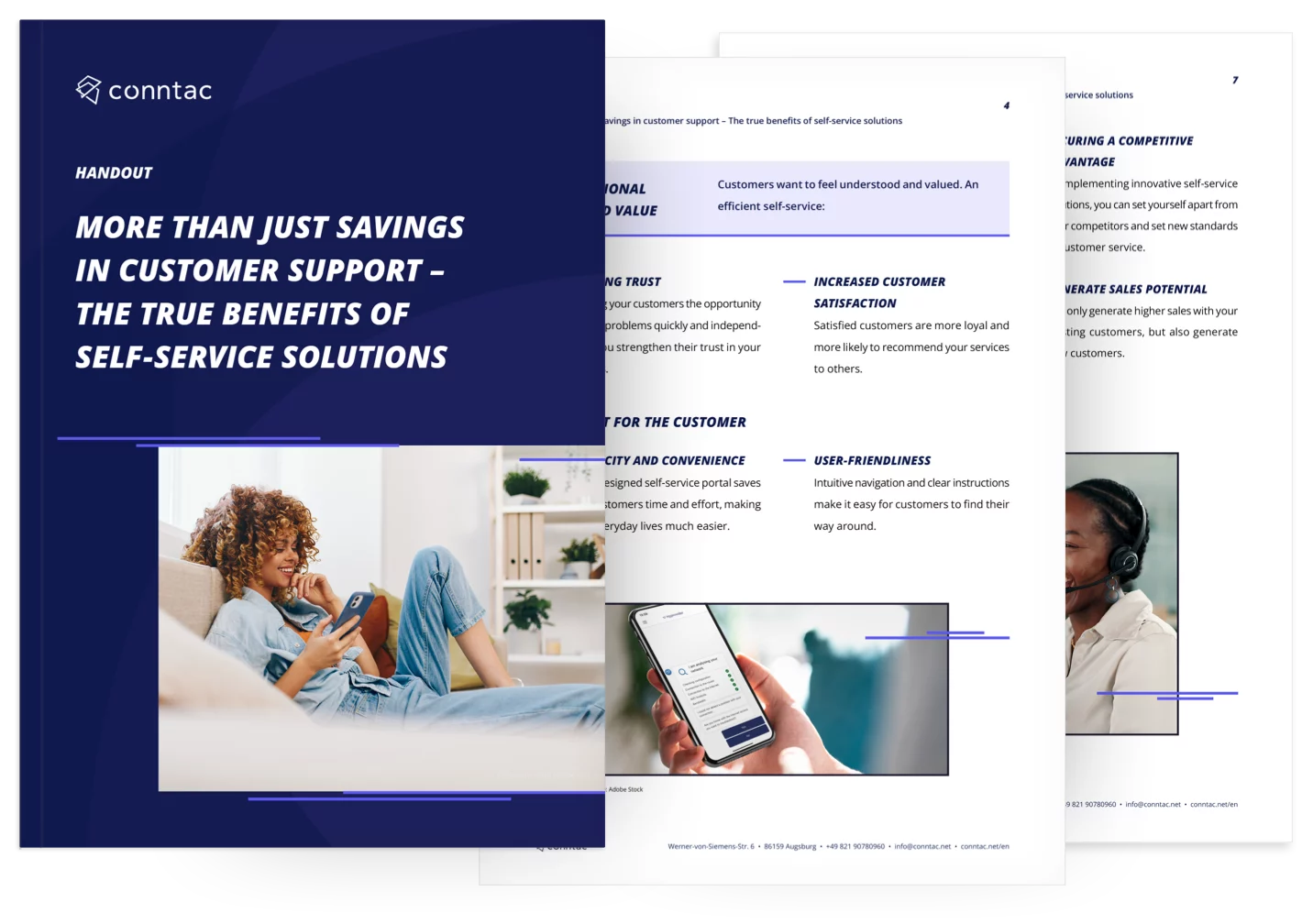
- Operational efficiency: Self-service reduces tickets and waiting times without sacrificing quality.
- Strengthening brand value: Experienced good service permanently shapes the perception of a company.
Conclusion: Service is not a support question – but an attitude
An Internet connection is a basic requirement today – but trust comes from experience. Every moment of contact is an opportunity to create closeness.
With self-service solutions such as MyProvider Vendors show that they take customers seriously – not just when problems arise, but every day.
Good service is genuine appreciation. It makes the difference between a transaction and a relationship – and is therefore a central pillar of sustainable customer loyalty.




.webp "Less effort, more loyalty – Customer Effort Score (CES)")